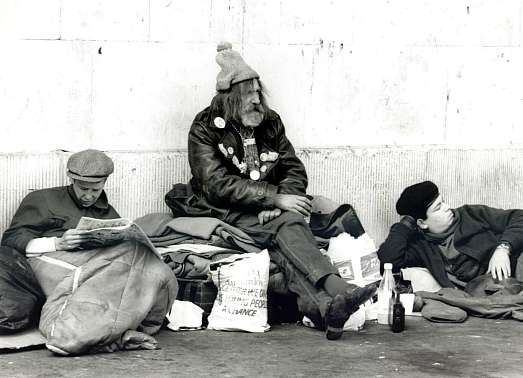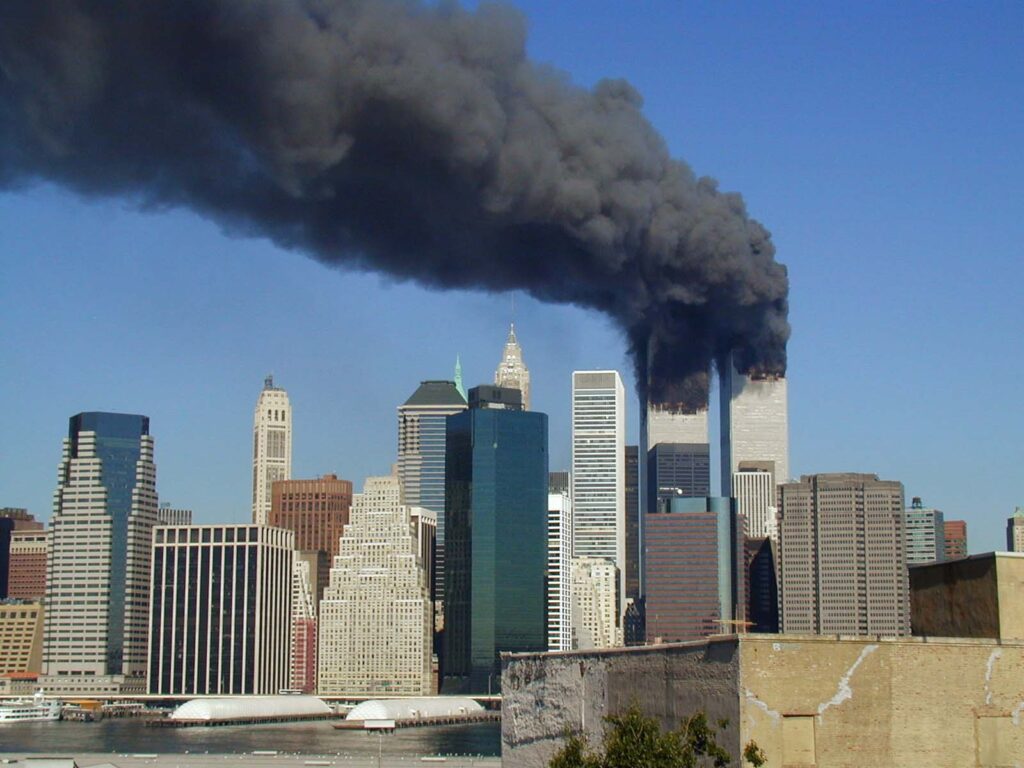
On the morning of September 11, 2001, a man named Raymond Brown was sorting through a bin of donated clothes at a Coalition for the Homeless drop-in center on West 30th Street when the first plane struck. He later recalled that for a long moment, no one moved. Then the television in the corner of the room showed the second tower burning, and the caseworkers began to weep.
Brown, who had been living in a city shelter for seven months, didn’t know it yet, but the world that had been arranged around him — a fragile architecture of housing subsidies, job training programs, and city contracts with nonprofits — was about to be dismantled and reassembled in ways that would make his life significantly harder. He was not alone. Approximately 1.7 million New Yorkers lived below the federal poverty line in 2001. When the towers fell, they fell on everyone. But they did not fall equally.
This is the story of what happened to New York City’s poorest residents in the decade that followed — how a national catastrophe intersected with a housing crisis, a recession, an ideological shift in government policy, and the slow, grinding machinery of urban inequality to produce one of the most acute expansions of poverty and homelessness the city had seen since the crack epidemic of the late 1980s.
The City Before the Towers: Fragile Prosperity
To understand what 9/11 broke, one must first understand what existed to be broken.
The 1990s had brought something close to a boom to New York City. Under Mayor Rudolph Giuliani, homelessness had been aggressively managed — though critics argued it had been criminalized rather than solved. The city’s shelter population, which had swelled to nearly 28,000 in 1987 during the Koch administration’s housing crisis, had been pushed down through a combination of increased shelter capacity, aggressive street sweeps, and what advocates called “warehousing” — moving people through the shelter system quickly, without durable housing solutions.
Employment in New York City reached historic highs by 2000. Tourism, finance, and a nascent tech sector fed a service economy that employed hundreds of thousands of low-wage workers — janitors, food service workers, hotel staff, and retail clerks — many of them recent immigrants living in densely packed apartments in the outer boroughs. These workers were prosperous by the standards of their home countries but economically precarious by almost any other measure. A single job loss, a medical emergency, or a landlord’s decision to convert a building could undo years of careful saving.
The city’s rental market reflected this tension. Between 1990 and 2001, the median rent in Manhattan increased by over 50 percent in real terms, driven by gentrification in neighborhoods like the East Village, Harlem, and Williamsburg. Rent-stabilized apartments — the single most important anti-poverty housing tool in New York’s history — were being quietly eroded through vacancy decontrol, a policy implemented in 1993 that allowed landlords to remove apartments from stabilization once rents exceeded $2,000 per month. By September 2001, an estimated 100,000 rent-stabilized units had been lost in a single decade.
This was the city on the morning of September 11th: a place of spectacular wealth and persistent, structural poverty, in fragile equilibrium.
The Immediate Aftermath: Economic Rupture Below Canal Street
The first economic shock was swift and geographic. Lower Manhattan, home to tens of thousands of low-wage service jobs — in restaurants, hotels, office buildings, and retail shops — effectively shut down for weeks after the attacks. The Financial District, which employed roughly 120,000 workers daily, became a restricted zone. The tourism industry, which generated approximately $25 billion annually for the city’s economy, collapsed almost overnight. Hotel occupancy rates in Manhattan fell to below 40 percent by October 2001.
For workers near the bottom of the wage scale, the consequences were immediate. According to a report by the Fiscal Policy Institute released in October 2001, an estimated 79,000 low-wage jobs were lost in New York City in the six weeks following the attacks — nearly half of them held by workers earning less than $11 per hour. The restaurant industry alone shed more than 11,000 positions. These were workers with no severance packages, minimal savings, and in many cases, no legal documentation — making them invisible to the unemployment insurance system.
Chinatown, located less than a mile from Ground Zero, offers one of the most documented case studies in this economic collapse. A survey conducted by the Asian American Federation of New York found that within three months of the attacks, 33 percent of Chinatown businesses had closed permanently, and unemployment in the neighborhood had risen by an estimated 30 percent. The area’s predominantly immigrant workforce — garment workers, restaurant employees, and small merchants — had no federal safety net to catch them.
City and federal emergency relief funds flowed rapidly to the area, but advocates noted almost immediately that the distribution was deeply uneven. The September 11th Victim Compensation Fund, established by Congress in October 2001, was designed primarily for families of those killed or injured in the attacks. The fund ultimately distributed over $7 billion, with average payouts exceeding $2 million for families of higher-income victims, scaled by lost future earnings — a formula that, by design, compensated the poor far less than the wealthy for the same loss.
The Shelter System Strains: 2001–2003
The city’s homeless shelter system registered the economic shock within months. Daily shelter census figures, which had hovered around 25,000 through 2001, began climbing sharply in early 2002. By January 2003, the shelter population had reached 38,000 — a number not seen since the late 1980s. Among those newly homeless, researchers and shelter workers identified a disturbing pattern: these were not the chronically homeless, the mentally ill, or the addicted. A significant portion were families.
The family shelter population was the most jarring indicator. The number of children sleeping in city shelters rose from approximately 16,000 in 2000 to more than 22,000 by 2003. The Coalition for the Homeless, which has tracked these figures since the 1980s, noted in its annual report that the increase represented “the largest and most rapid expansion of family homelessness since the Great Depression-era housing crisis.”
The causes were structural, not behavioral. New York City’s rental assistance program, known as the Jiggetts supplement, had been limited in scope for years, and in 2001 — before the full economic impact of the attacks had registered — the state legislature declined to expand income eligibility thresholds to keep pace with rising rents. As housing costs climbed and incomes stagnated or fell, the gap between what poor families could afford and what the market demanded grew into a chasm.
Meanwhile, the Bloomberg administration, which took office in January 2002, inherited both the post-9/11 fiscal crisis and an ideological conviction that shelter should be a temporary bridge to self-sufficiency, not a long-term resource. The administration’s “Prevention, Assistance, and Temporary Housing” initiative, known as PATH, introduced a controversial new intake process for homeless families that critics argued was designed to divert applicants away from the shelter system rather than serve them. Investigators from the Urban Justice Center documented dozens of cases in which families with children were turned away from intake centers in winter months.
The Bloomberg Years: Policy, Housing, and the Limits of Compassion
Mayor Michael Bloomberg, who governed New York City from 2002 through 2013, remains one of the most contested figures in the history of the city’s response to poverty. A billionaire businessman, he brought a managerial sensibility to social problems, funding ambitious research projects and launching data-driven antipoverty initiatives that earned national attention. At the same time, his tenure saw persistent increases in homelessness and the continuation of policies that advocates argued prioritized the appearance of order over the substance of relief.
In 2004, the Bloomberg administration released a five-year plan to reduce homelessness by two-thirds. The plan was, in many respects, innovative: it emphasized “housing first” principles, recognizing that placing chronically homeless individuals directly into permanent housing — rather than cycling them through shelters — produced better long-term outcomes. The administration significantly expanded supportive housing, a model in which formerly homeless individuals with mental illness or addiction receive both an apartment and on-site social services.
Yet progress on the broader homelessness crisis stalled, in part because the fundamental driver — housing affordability — was not addressed with commensurate force. Between 2002 and 2010, median rents in New York City rose approximately 18 percent in real terms, while incomes for the bottom quarter of earners grew less than 5 percent. The Section 8 federal housing voucher program, the primary tool available to help very low-income families afford private market housing, was subjected to a nationwide freeze by the Bush administration beginning in 2004, cutting off a critical lifeline.
The result was a paradox: a city investing more in homelessness services than ever before, yet producing more homeless people than it had seen in a generation. By 2007, the shelter population exceeded 35,000 on most nights, even as the city’s economy had largely recovered from post-9/11 contraction.
The 2008 Collapse: The Second Blow
If September 11, 2001 was the first blow, the financial crisis of 2008 was the second — and in some respects the deeper wound.
When Lehman Brothers collapsed in September 2008, exactly seven years after the towers fell, the tremors reached every corner of the economy. New York City lost approximately 130,000 jobs between 2008 and 2010. Foreclosures, though less prevalent in New York than in Sun Belt states due to the prevalence of rental housing, rippled through the outer boroughs, particularly in neighborhoods like East New York, Jamaica, and the South Bronx, where subprime mortgage lenders had aggressively marketed predatory loans to first-generation homeowners.
The poverty rate in New York City, which had held relatively steady at around 18 to 19 percent through the mid-2000s, climbed to 21.2 percent by 2010 — meaning more than 1.7 million people lived below the federal poverty line, with several hundred thousand more living in the “near poor” zone that researchers increasingly recognized as functionally indistinguishable from poverty. For children, the numbers were even starker: by 2010, roughly 30 percent of New York City children lived in poverty, a figure that placed the wealthiest large city in the United States in company with some of the poorest regions in the developing world.
The shelter system, still straining from the post-9/11 surge, buckled further. By December 2010, the daily shelter census reached 41,000 — a historic record that eclipsed even the darkest years of the crack epidemic. The city opened armories, converted vacant schools, and contracted with hotels to house overflow families.
The Human Texture of the Crisis
Statistics illuminate the scale of suffering; they do not convey its texture.
In the South Bronx — long the paradigmatic landscape of New York poverty — the 9/11 decade produced conditions that residents described as a kind of persistent, grinding emergency. In the Hunts Point neighborhood, where the median household income in 2005 was approximately $17,000, the combination of post-9/11 job losses, rising rents, and reduced city services created what community organizer Alexie Torres-Fleming described as “an invisible disaster” — one that generated no dramatic images, attracted no telethons, and inspired no congressional emergency legislation.
Immigrant communities bore particular burdens. The post-9/11 climate — characterized by increased immigration enforcement, the creation of the Department of Homeland Security, and a palpable atmosphere of suspicion toward Muslim, Arab, and South Asian communities — made many poor immigrants reluctant to access public services to which they were legally entitled. Researchers at the Urban Institute documented a significant drop in immigrant families’ use of food stamps, Medicaid, and housing assistance beginning in late 2001, driven by fear rather than ineligibility.
Women-headed households with children remained disproportionately represented among the homeless and near-poor throughout the decade. A 2006 report by the Institute for Children and Poverty found that more than 70 percent of homeless families in New York City shelters were headed by single mothers, the majority of whom had worked within the previous two years. These were not women who had fallen through cracks in the system; they were women for whom the system had never been adequate.
Lasting Impact: The Decade’s Shadow Over Modern New York
The 9/11 decade left structural marks on New York City’s poverty landscape that remain visible decades later.
The erosion of affordable housing, accelerated by post-9/11 economic disruption and the 2008 financial crisis, was never fully reversed. The rent-stabilized apartment stock continued to shrink. Neighborhoods that housed poor and working-class New Yorkers in 2001 — parts of Harlem, Bushwick, Long Island City — underwent rapid gentrification in the decade that followed, displacing residents who had no equivalent housing options elsewhere in the city.
The shelter system, expanded dramatically in response to successive crises, became a semi-permanent institution. New York City operates one of the largest municipal homeless shelter systems in the world, a fact that advocates argue reflects not compassion but the failure to build and preserve affordable housing at sufficient scale.
The immigrant communities most severely affected by post-9/11 enforcement and economic dislocation — South Asians, Arabs, undocumented workers from Latin America and the Caribbean — saw their economic precarity calcified in ways that intersected with long-term patterns of wealth inequality in the city.
Historical Takeaways
Several threads emerge clearly from this history.
Economic shocks do not affect all people equally. The same catastrophe that cost a Wall Street banker his year-end bonus cost a Chinatown garment worker her livelihood.
Housing affordability is the structural foundation of poverty. Every other intervention — job training, mental health services, addiction treatment — operates on unstable ground if the basic cost of shelter exceeds what poor families can pay.
Policy choices shape human outcomes. The decision to freeze Section 8 vouchers, to erect barriers at shelter intake centers, to allow rent stabilization to erode — these were not inevitable consequences of economic forces. They were choices, made by identifiable people, in specific political contexts.
Conclusion: Reckoning With What We Know
Raymond Brown, the man sorting donated clothes on the morning the towers fell, found permanent housing in 2004 through a supportive housing program funded, in part, by Bloomberg administration initiatives. His story is not typical. For every family that found its way from shelter to stability during the 9/11 decade, many more cycled through a system that had been designed, in its deepest logic, to manage poverty rather than end it.
History does not repeat itself, but it accumulates. The decisions made in the years after September 11, 2001 did not create New York City’s poverty — that history stretches back centuries, through waves of immigration, industrial transformation, and the slow politics of race and class. But those decisions shaped the particular form that poverty took in the first decade of the twenty-first century, and their consequences remain embedded in the city’s housing stock, its shelter population, and the quiet arithmetic of rent and wages that determines, for millions of New Yorkers, whether any given month ends in stability or crisis.
Understanding this history is not an exercise in retrospective grievance. It is a precondition for doing better.