The Morning of January 22, 1982.
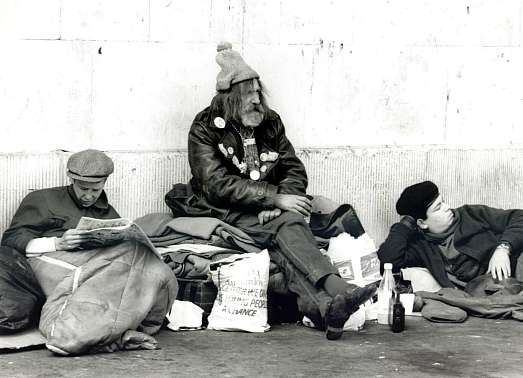
At 5:47 in the morning, a sanitation worker named Ruben Torres arrived for his shift along the southern edge of Central Park and found forty-three men sleeping on iron benches, wrapped in flattened cardboard boxes and pages torn from the Daily News. It was seventeen degrees Fahrenheit. This was not, he would later tell the New York Times, an unusual sight anymore. It had simply become the texture of the city.
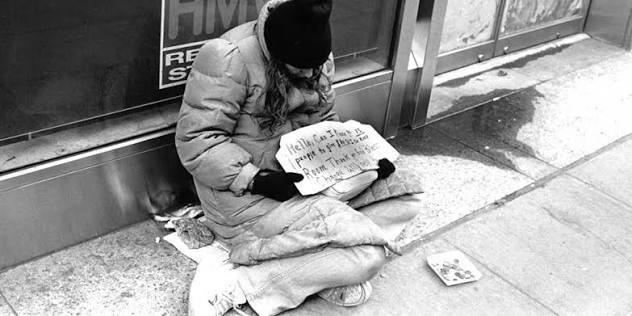
That image — frost-bitten men in the shadow of some of the world’s most expensive real estate — captures the central paradox of 1980s New York City: a metropolis simultaneously ascending toward its gilded financial peak and hemorrhaging its most vulnerable residents onto the pavement below. Between 1980 and 1989, the number of people sleeping in New York City shelters increased by roughly 500 percent. The number living on the streets — by definition uncountable — swelled visibly, measurably, and unmistakably.
This is not a simple story of personal failure or moral collapse. It is a story of converging systems — economic restructuring, federal policy retreats, psychiatric deinstitutionalization, and a housing market that began treating shelter as a speculative asset rather than a human necessity. To understand why the streets filled in the 1980s, we must follow each of those threads back to where they began.
The Long Fuse: Setting the Conditions Before 1980
The catastrophe of the 1980s did not arrive without warning. New York City’s economic near-death experience in 1975 had already cracked the foundation. Facing municipal bankruptcy, the city was forced to accept a financial rescue package brokered by state and federal authorities that imposed severe austerity measures. Roughly 65,000 city employees were laid off between 1975 and 1978. The municipal hospital system was gutted. Housing inspection and code enforcement were stripped. The South Bronx, already decimated by urban renewal displacement in the 1950s and ’60s, entered a cycle of landlord abandonment and arson so severe that by 1980, entire city blocks had been reduced to rubble. Thirty-five percent of the Bronx’s housing stock disappeared in a single decade.
Meanwhile, the nation’s approach to mental health had undergone a fundamental transformation. Beginning in the early 1960s and accelerating through the 1970s, the federal government championed deinstitutionalization — the policy of releasing patients from large state psychiatric hospitals into community-based care. The intent was humane; the execution was catastrophic. The community mental health centers that Congress promised in the Community Mental Health Act of 1963 were never adequately funded. When New York State reduced its psychiatric hospital population from roughly 93,000 patients in 1955 to fewer than 24,000 by 1981, according to the New York State Office of Mental Health, tens of thousands of severely mentally ill individuals were discharged into a city that simply lacked the infrastructure to support them. Many drifted, predictably and tragically, toward the streets.
These were the embers. The 1980s supplied the oxygen.
Reaganomics and the Federal Retreat
On January 20, 1981, Ronald Reagan was inaugurated on a platform that fundamentally reframed the government’s relationship to poverty. “Government is not the solution to our problem,” he declared. “Government is the problem.” Within two years, the consequences for low-income Americans — and especially for New York City — would be severe and measurable.
The Omnibus Budget Reconciliation Act of 1981 cut the federal budget for low-income housing programs by approximately 75 percent over four years. The Department of Housing and Urban Development’s budget fell from $32 billion in 1981 to $7.5 billion by 1988, according to figures cited by historian Peter Marcuse in his widely read analysis of housing policy during this period. Construction of new public housing units, which had averaged roughly 25,000 per year nationally during the 1970s, virtually ceased.
At the same time, the administration tightened eligibility requirements for the Social Security Disability Insurance and Supplemental Security Income programs. Between March 1981 and the end of 1982, approximately 490,000 people were removed from disability rolls nationally, many of them individuals with chronic mental illness who had depended on those benefits to maintain marginal housing stability. In New York City alone, tens of thousands lost benefits in this purge. Many had no family safety net. Losing a $200 monthly disability check frequently meant losing a single-room occupancy hotel room — and that meant the street.
The economic recession of 1981–1982, the worst since the Great Depression, deepened the crisis. National unemployment peaked at 10.8 percent in December 1982. Manufacturing employment in New York City, already declining, contracted sharply. Deindustrialization — the structural shift away from factory work — was eliminating exactly the kinds of jobs that had historically provided a foothold for unskilled and working-class men. The jobs that replaced them, concentrated in finance and service, required educational credentials that many displaced workers did not have.
The Vanishing of the SRO
No physical change in New York City’s housing landscape did more immediate damage to the homeless population than the systematic demolition of the single-room occupancy hotel, known as the SRO.
SROs were unglamorous places — typically converted Victorian-era rooming houses or small commercial hotels where a person could rent a furnished room by the week for as little as $40 to $80 in 1975 dollars, sharing a communal bathroom down the hall. They were not comfortable. They were, however, housing. And for the city’s most economically marginal residents — elderly men on fixed incomes, recently discharged psychiatric patients, day laborers, alcoholics, and individuals cycling in and out of the welfare system — they provided a critical bottom rung on the housing ladder.
Between 1970 and 1985, New York City lost approximately 100,000 SRO units, according to research by sociologist Kim Hopper and historian Jill Hamberg published in their landmark 1984 study The Making of America’s Homeless. Some were demolished outright to make way for luxury development. Others were converted to market-rate apartments as Manhattan real estate values climbed dramatically in the late 1970s and early 1980s. City zoning laws, amended under pressure from real estate interests, made it increasingly difficult to operate SROs and easier to convert them into more profitable uses.
The economics were straightforward and brutal: a single-room occupancy hotel on the Upper West Side was worth far more as a luxury condominium conversion. The human cost was equally straightforward. When a man who had lived in a $55-a-week room for twelve years was told his building was being converted, his options were narrow. The city shelter system. The subway tunnels. The park bench that Ruben Torres would find at 5:47 in the morning.
The Shelter System and Its Limits
By the early 1980s, New York City’s response to its growing homeless population centered on an emergency shelter system that was, by most accounts, inadequate in capacity and appalling in condition.
The system operated under the legal framework established by the landmark 1981 consent decree in Callahan v. Carey, in which the State of New York recognized a legal right to shelter for homeless men — the first such legal obligation in American history. This was, in principle, an extraordinary protection. In practice, the shelters established to fulfill it frequently replicated many of the conditions that had driven people to the streets in the first place.
The Fort Washington Armory in Washington Heights, which became one of the city’s largest shelters, housed over a thousand men in a vast drill floor under conditions that the New York Times described in 1981 as resembling “a refugee camp.” Violence was common. Theft was endemic. Lights remained on through the night. For individuals with serious mental illness, the chaos of the large shelters was often unendurable; many chose the relative autonomy of a highway underpass over a cot in a hall echoing with shouting and fluorescent buzz.
Women and families with children fared no better. The number of families entering the shelter system in New York City rose from approximately 1,000 in 1981 to over 5,000 by 1987, according to the City’s own shelter census data. The Martinique Hotel in Midtown, used to house homeless families during this period, became a symbol of concentrated misery: investigative reporter Jonathan Kozol documented the building’s conditions in his 1988 book Rachel and Her Children, describing families of five crowded into single rooms, children doing homework in hallways, roaches moving freely through kitchens, and a desk clerk who collected government vouchers while residents were denied basic building services.
The Crack Epidemic and Structural Acceleration
The mid-1980s introduced a new variable that compounded every existing pressure: the crack cocaine epidemic.
Crack — a smokable, cheap, and extraordinarily addictive form of cocaine — appeared in New York City neighborhoods around 1984 and spread rapidly through communities already destabilized by unemployment, deinstitutionalization, and housing loss. Its effects on the homeless population were complex and not unidirectional: crack did not simply cause homelessness, but it dramatically accelerated the downward spiral for people who were already financially and socially precarious. It also drove violence into neighborhoods that had been recovering, further depressing housing stability in low-income communities.
By 1988, the majority of new entrants to the New York City shelter system were estimated to have substance use disorders, according to figures cited by the New York City Human Resources Administration. The intersection of addiction, mental illness, and homelessness — what clinicians would later call co-occurring disorders — created a population that neither the shelter system nor the psychiatric system was equipped to serve. Men and women fell between every institutional crack.
Counting the Uncountable
One of the persistent intellectual and political challenges of the 1980s homelessness crisis was simply measuring it. In 1984, the Reagan administration’s Department of Housing and Urban Development released an estimate that put the total homeless population of the United States at between 250,000 and 350,000 people. Advocates, including the National Coalition for the Homeless, countered with estimates exceeding 3 million. The disagreement was not merely political; it reflected genuinely different methodologies and definitions.
In New York City, the Coalition for the Homeless — founded in 1981 as the nation’s first legal advocacy organization for homeless people — conducted street counts that produced figures far above official shelter census numbers. The invisibility of homelessness made precision impossible: people sleeping in subway tunnels, abandoned buildings, cars, or in the apartments of friends and relatives under precarious arrangements were rarely captured in official statistics.
What was beyond dispute was the trend line. The number of individuals using the city’s shelter system on any given night rose from approximately 2,000 in 1978 to over 28,000 by 1988. The visual evidence on the streets of Midtown, in Grand Central Terminal, beneath the bridges of the outer boroughs, was undeniable.
Public Attitudes and Political Responses
Public reaction to the visible explosion of homelessness was fractured and often contradictory. Polls from the mid-1980s consistently showed that majorities of New Yorkers felt sympathy toward homeless individuals while simultaneously supporting policies — including aggressive police enforcement of anti-loitering laws — that criminalized their presence in public spaces.
Mayor Ed Koch, who governed New York throughout most of the decade, articulated a philosophy that blended fiscal conservatism with occasional humanitarian gesture. His administration expanded the shelter system substantially while also resisting the more fundamental demands of housing advocates for permanent affordable housing construction. Koch’s 1983 decision to authorize the involuntary removal of severely mentally ill individuals from the streets — a policy challenged in court by advocates — reflected the tension between genuine concern for vulnerable individuals and a desire to restore a sense of civic order in tourist-facing areas of the city.
The media coverage of the period oscillated between compassionate profile journalism and sensationalist crime reporting. The figure of the “dangerous vagrant” competed in the public imagination with the figure of the “tragic victim of the system.” Neither fully captured the heterogeneous reality of a population that included Vietnam veterans, recently divorced mothers, psychotic individuals never properly treated, middle-aged men whose manufacturing jobs had simply ceased to exist, and teenagers who had aged out of the foster care system into the street.
Lasting Impact: The Precedents the 1980s Set
The 1980s crisis established patterns that would define New York City’s relationship to homelessness for decades afterward. The shelter system that expanded so rapidly in that decade became a permanent institutional infrastructure — a network so large and so costly that dismantling it became politically unimaginable, even as critics argued it perpetuated rather than resolved homelessness. By 2023, New York City was spending over $3 billion annually on homeless services, sheltering more than 65,000 individuals on any given night — a figure that exceeded the 1988 peak.
The legal framework established in Callahan v. Carey remained unique among American cities, making New York simultaneously the most generous and the most expensive system in the country. The tension between the right to shelter and the aspiration of permanent housing remained unresolved — a living argument about what government owes its most vulnerable residents.
The housing stock losses of the 1980s proved irreversible. The 100,000 SRO units destroyed in that decade were never replaced. The federal commitment to affordable housing construction, so dramatically reduced under Reagan, was never fully restored by subsequent administrations of either party.
Key Historical Takeaways
The dramatic rise of homelessness in 1980s New York City was the product of at least five converging forces: the federal withdrawal from affordable housing investment; the mass closure of state psychiatric hospitals without adequate community-based replacement services; the systematic demolition of SRO housing driven by real estate speculation; the economic recession of 1981–1982 and the structural deindustrialization of the city’s economy; and the crack cocaine epidemic that accelerated the vulnerability of already-precarious populations.
No single cause explains the crisis. That is precisely the point. When five load-bearing walls are removed simultaneously, the structure collapses.
Conclusion: What the Pavement Remembers
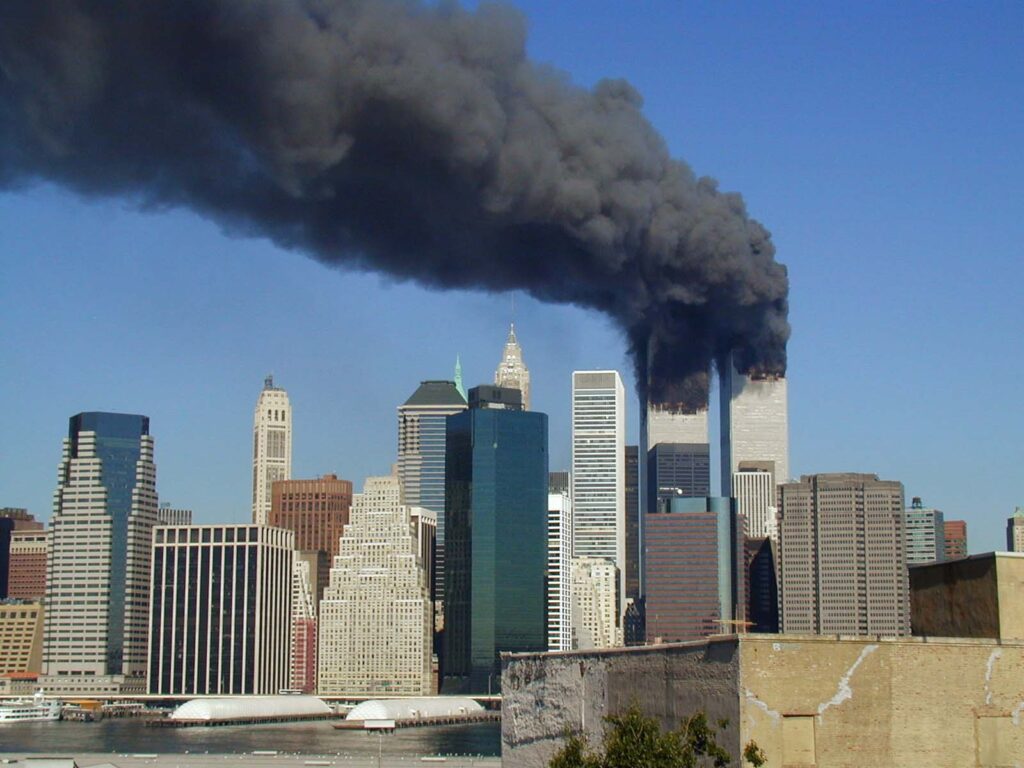
When historians look back at the 1980s, they often focus on the era’s prosperity — the bull market, the gleaming towers of Lower Manhattan, the cultural exuberance of a city reborn after its near-bankruptcy. Both stories are true, and that is what makes the decade so instructive.
New York in the 1980s demonstrated, with a clarity rarely seen in peacetime, how rapidly a society can produce mass homelessness when housing policy, mental health policy, and economic policy move simultaneously in directions that strip away the marginal supports that keep vulnerable people housed.
The men Ruben Torres found on those park benches in January 1982 were not there because they had failed. They were there because a sequence of institutional decisions — made in Washington, in Albany, in City Hall, in corporate boardrooms — had removed the rungs below them one by one.
History does not repeat itself automatically. But it does repeat itself when its lessons go unlearned. The story of the 1980s is, ultimately, an invitation to examine what any society values enough to protect — and what it is willing to let fall through the cracks in the pavement.