How New York City’s Poor Survived an Era That Changed America Forever
Imagine standing on a Lower East Side street in the winter of 1895. Horse-drawn wagons rattle over uneven cobblestones. Pushcart vendors call out in dozens of languages. Coal smoke hangs over crowded tenements where entire families share a single room. Children no older than ten hurry to factories before sunrise instead of classrooms, while others sell newspapers in the freezing streets to earn a few pennies for dinner.
At the same time, only a few miles away, Fifth Avenue mansions were growing larger than ever during America’s Gilded Age. The contrast was extraordinary. By 1900, New York City had become the nation’s largest city with more than 3.4 million residents, yet hundreds of thousands lived in overcrowded housing with poor sanitation and uncertain employment.
Poverty in New York was never simply the result of individual hardship. It developed through waves of immigration, rapid industrialization, economic booms, devastating financial panics, public health crises, and changing ideas about the responsibility of government. Some institutions sought to discipline the poor. Others attempted to educate, shelter, or empower them. By the time the Great Depression struck, New York had already spent decades experimenting with charity, settlement houses, child welfare reforms, and public relief.
This chapter follows one of the most transformative periods in New York City’s history—from the rise of child labor during industrialization to the reforms of the Progressive Era and finally to Franklin D. Roosevelt’s New Deal. Along the way, organizations such as the Roman Catholic Protectory, Greenwich House, and the Henry Street Settlement became important chapters in the city’s evolving response to poverty, while the Federal Emergency Relief Administration reshaped the relationship between citizens and government during one of America’s darkest economic crises.
The Industrial City Takes Shape (Late 1800s)
By the late nineteenth century, New York City had become the primary gateway for immigrants entering the United States. Millions arrived through Castle Garden and, after 1892, Ellis Island, hoping to escape famine, persecution, political instability, or poverty in Europe.
Most newcomers found work quickly—but rarely under comfortable conditions.
Factory employment expanded rapidly in industries such as garment manufacturing, cigar making, printing, construction, and food processing. These jobs often required little formal education, making them accessible to immigrants. However, wages remained low, working hours frequently stretched beyond ten hours per day, and workplace injuries were common.
Housing conditions reflected the city’s explosive growth. Historian Jacob Riis famously documented life inside New York’s overcrowded tenements in his 1890 book How the Other Half Lives. Families frequently rented dark interior rooms without proper ventilation or plumbing. Disease spread easily through neighborhoods where thousands shared limited sanitation facilities.
Riis wrote that “long rows of tenements…crowded with human beings” represented one of the city’s greatest social challenges. His photographs shocked middle-class audiences and helped inspire housing reform.
According to the 1890 federal census, Manhattan ranked among the most densely populated places on Earth, with some neighborhoods exceeding 700 residents per acre.
The rapid expansion of industry created jobs but also widened inequality. Wealth accumulated among industrialists while many workers remained one missed paycheck away from homelessness.
Why this era mattered
Industrialization created the economic conditions that drew millions to New York. At the same time, overcrowding, low wages, and unsafe housing laid the foundation for many of the city’s long-term struggles with poverty.
Child Labor: When Childhood Became Part of the Workforce
As immigration accelerated during the late nineteenth century, child labor became one of New York’s defining social issues.
For thousands of families, every household member contributed financially. Children worked because family survival often depended on their earnings.
Newsboys sold newspapers from dawn until late evening.
Messenger boys delivered telegrams throughout the city.
Girls frequently worked in garment factories or completed sewing jobs from home.
Young boys cleaned machinery, carried materials through factories, polished shoes, sold flowers, or worked as apprentices.
The federal census of 1900 recorded nearly two million working children across the United States, while New York employed tens of thousands in factories, workshops, and street trades.
Working conditions could be harsh. Long hours interrupted education, injuries were common, and many children suffered chronic health problems caused by dust, poor nutrition, and exhaustion.
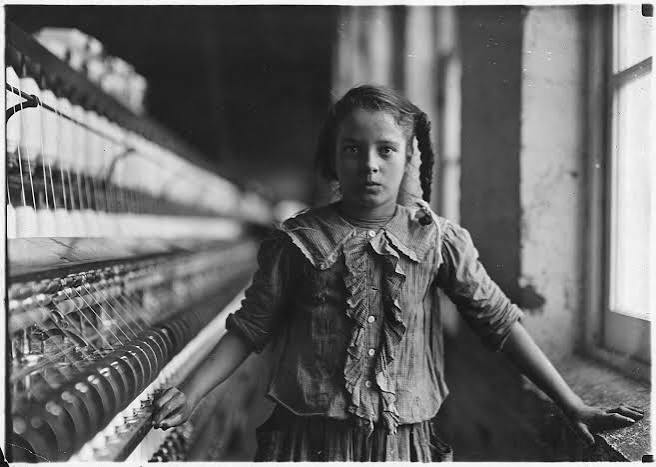
Photographer Lewis Hine documented these conditions beginning in the early twentieth century. His images showed exhausted young workers standing beside dangerous machinery or carrying heavy loads despite their small size. His photographs became powerful evidence supporting labor reform.
Public attitudes gradually shifted.
Earlier generations often viewed child labor as a necessary part of working-class life. Progressive reformers increasingly argued that childhood should be devoted to education rather than industrial labor.
New York slowly strengthened compulsory education laws while expanding restrictions on child employment. Enforcement remained inconsistent, but reform gathered momentum throughout the Progressive Era.
Why this era mattered
Efforts to reduce child labor reflected a broader shift in public thinking. Poverty increasingly became viewed as a social problem requiring structural solutions instead of solely individual responsibility.
The Roman Catholic Protectory: Shelter, Education, and Debate
One response to widespread child poverty emerged through religious institutions.
Founded in 1863, the Roman Catholic Protectory became one of the largest Catholic child-care institutions in the United States. Initially located in Manhattan before later expanding into the Bronx, it cared for orphaned, abandoned, neglected, and homeless children—many from immigrant Irish and German Catholic families.
At its height, thousands of children passed through its programs.
The Protectory offered food, clothing, schooling, religious instruction, vocational training, and housing. Boys learned trades such as carpentry, printing, farming, or blacksmithing. Girls received education alongside instruction in domestic skills that reflected Victorian expectations of women’s roles.
Supporters viewed the institution as protection against homelessness, crime, and exploitation.
Critics argued that large institutional settings could separate children from their families for extended periods and emphasized discipline over emotional care.
Historical records suggest both perspectives contained elements of truth. Many former residents remembered receiving stability and education unavailable elsewhere, while others recalled strict routines and institutional life.
The Protectory reflected nineteenth-century beliefs that moral education, structured work, and religious guidance could help prevent future poverty.
Why this era mattered
The Roman Catholic Protectory illustrated the growing role of private charities and religious organizations before government welfare systems became widespread. These institutions filled gaps that public agencies were often unable—or unwilling—to address.
Settlement Houses Transform Urban Reform
By the early 1890s, another model emerged that challenged traditional charity.
Rather than separating themselves from poor neighborhoods, settlement workers chose to live within them.
Their goal extended beyond providing relief.
They hoped to improve entire communities.
Henry Street Settlement
Founded in 1893 by nurse Lillian Wald and Mary Brewster, the Henry Street Settlement began after Wald witnessed severe poverty on the Lower East Side while providing medical care.
She later described encountering overcrowded apartments where illness spread rapidly because families lacked access to healthcare.
Instead of opening a hospital alone, Wald created a neighborhood settlement offering nursing services, education, recreation, childcare, employment assistance, English-language instruction, and cultural programs.
Public health became one of its greatest contributions.
Settlement nurses visited families directly, reducing disease while teaching sanitation and preventive healthcare.
Henry Street also advocated for school nurses, playgrounds, labor protections, and better housing legislation.
Its influence eventually reached well beyond New York City.
Greenwich House
Only a few years later, in 1902, Greenwich House opened in Greenwich Village under the leadership of Mary Kingsbury Simkhovitch.
Like Henry Street Settlement, Greenwich House believed poverty involved more than inadequate income.
Neighborhood conditions, education, health, recreation, and civic participation all influenced quality of life.
Residents organized classes for immigrants, childcare programs, music education, employment services, legal assistance, and public lectures.
The organization became deeply involved in campaigns for housing reform, sanitation improvements, labor protections, and better urban planning.
Settlement houses also collected valuable data about neighborhood conditions, providing policymakers with firsthand evidence of overcrowding, disease, and unemployment.
Unlike traditional charity, settlement houses encouraged cooperation between residents and reformers rather than one-way assistance.
Why this era mattered
Settlement houses redefined social work. They emphasized prevention, education, healthcare, and community development—ideas that influenced modern nonprofit organizations and public social services.
Progressive Era Reform and Expanding Government Responsibility
Between roughly 1900 and World War I, Progressive reform reshaped New York City’s response to poverty.
Journalists, physicians, religious leaders, labor activists, and social workers increasingly argued that poor housing, unsafe factories, and inadequate education created cycles of poverty.
Several reforms followed:
- Stronger tenement housing regulations
- Expanded public education
- Factory safety improvements
- Child labor restrictions
- Public health initiatives
- Professional social work
The tragic Triangle Shirtwaist Factory fire in 1911 accelerated workplace reform after 146 workers—most of them young immigrant women—lost their lives.
Investigations exposed dangerous working conditions that had long affected low-income laborers.
State lawmakers responded with significant workplace safety legislation.
The relationship between poverty and public policy became increasingly clear.
Government intervention was no longer viewed solely as emergency relief.
It became a tool for preventing future hardship.
Why this era mattered
Progressive reforms established many of the regulatory systems that protected workers, tenants, and children. These reforms would prove essential during future economic crises.
The Great Depression Changes Everything
The next major shift occurred when financial markets collapsed in October 1929.
Although the stock market crash did not immediately create the Great Depression, it accelerated an economic collapse already underway.
Banks failed.
Factories closed.
Construction projects stopped.
Businesses reduced payrolls or shut down entirely.
Unemployment soared nationwide.
In New York City, breadlines stretched around entire city blocks.
Charitable organizations quickly became overwhelmed.
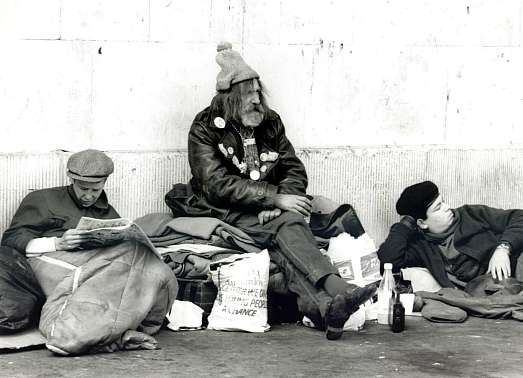
Photographs from the early 1930s show unemployed men waiting patiently for free meals despite years of steady employment before the crisis.
Many families exhausted their savings within months.
Evictions increased.
Some doubled up with relatives.
Others rented furnished rooms or entered temporary shelters.
Still others became homeless.
By 1933, approximately one-quarter of the American labor force was unemployed. In New York City, unemployment reached similarly devastating levels, although exact estimates varied because many workers held irregular or temporary jobs.
Newspapers regularly described growing lines outside soup kitchens operated by religious organizations, municipal agencies, and private charities.
One New York Times report observed that relief agencies faced demands unlike anything experienced in previous economic downturns.
Traditional charity had reached its limits.
Why this era mattered
The Great Depression exposed weaknesses in relying primarily on private charity. It created public support for unprecedented federal involvement in economic recovery and social welfare.
Franklin D. Roosevelt and a New Philosophy of Relief
In 1933, Franklin Delano Roosevelt assumed the presidency during one of the worst economic crises in American history.
Roosevelt already possessed significant experience addressing social problems from his years as Governor of New York.
His administration introduced the New Deal—a broad collection of programs designed to stabilize banks, reduce unemployment, restore confidence, and provide relief to struggling Americans.
Unlike earlier approaches that relied mainly on local charities, the federal government accepted a much larger role in responding to mass unemployment.
For New York City, this represented a historic turning point.
Relief increasingly became organized at the national level.
Public employment replaced some forms of direct charity.
Infrastructure projects generated jobs while improving cities.
The philosophy of government responsibility changed permanently.
The Federal Emergency Relief Administration
Among Roosevelt’s earliest initiatives was the Federal Emergency Relief Administration (FERA), established in 1933 under the leadership of Harry Hopkins.
FERA distributed federal funding directly to states and local governments for emergency relief.
Instead of relying entirely on private donations, governments could now finance food assistance, housing support, clothing, medical care, and employment programs.
New York became one of the largest recipients because of its enormous unemployed population.
Hopkins argued that unemployed Americans needed jobs whenever possible rather than indefinite dependence on relief.
FERA therefore combined direct financial assistance with work programs.
Millions of Americans ultimately received aid through FERA before many responsibilities shifted to later New Deal agencies.
Historians frequently identify FERA as a major transition between nineteenth-century charitable relief and the modern American welfare state.
The program did not eliminate poverty.
However, it prevented millions from experiencing even greater hardship during the Depression.
Why this era mattered
FERA demonstrated that national government could coordinate large-scale emergency assistance during economic catastrophe. Later programs, including the Works Progress Administration and aspects of Social Security, built upon this foundation.
A City Forever Changed
By the end of the 1930s, New York City’s approach to poverty looked dramatically different from that of the late nineteenth century.
Children spent more time in schools than factories.
Settlement houses had become respected community institutions.
Professional nursing and social work expanded access to healthcare.
Housing reforms improved many neighborhoods, even though overcrowding persisted.
Government relief had become a permanent feature of American public life.
The transformation did not happen overnight.
Instead, it emerged through decades of reform, experimentation, economic crisis, and public debate.
Organizations such as the Roman Catholic Protectory, Henry Street Settlement, and Greenwich House represented different philosophies of helping vulnerable populations, yet each influenced the city’s evolving social safety net.
Meanwhile, the Great Depression demonstrated that even hardworking families could become poor through forces beyond their control.
That realization permanently altered public conversations about unemployment, homelessness, and economic security.
The Lasting Legacy for Modern New York City
Many institutions and policies established during this era continue to shape New York today.
Settlement houses remain active, providing education, healthcare, senior services, youth programs, legal assistance, and community support.
Child labor laws protect millions of young workers while compulsory education remains a cornerstone of opportunity.
Public housing policy, emergency relief programs, unemployment assistance, and social welfare systems all trace important elements of their history to Progressive reform and the New Deal.
The debates themselves also continue.
Questions surrounding affordable housing, wage inequality, homelessness, immigration, and public responsibility remain central to New York’s civic life.
Understanding these earlier decades helps explain why modern solutions often combine government programs, nonprofit organizations, religious institutions, and private philanthropy rather than relying on a single approach.
History reveals that New York’s response to poverty has always evolved through cooperation, disagreement, experimentation, and adaptation.
Key Historical Takeaways
- Industrialization attracted millions of immigrants while creating overcrowded housing, dangerous workplaces, and widespread poverty.
- Child labor became a survival strategy for many immigrant families before Progressive reforms expanded education and workplace protections.
- The Roman Catholic Protectory reflected the important role of religious institutions in caring for vulnerable children before modern welfare programs.
- Henry Street Settlement and Greenwich House transformed social work by emphasizing healthcare, education, neighborhood improvement, and community empowerment.
- Progressive Era reforms strengthened housing laws, labor protections, and public health initiatives that improved living conditions across New York City.
- The Great Depression overwhelmed private charities and demonstrated the need for large-scale public intervention.
- Franklin D. Roosevelt’s New Deal, particularly the Federal Emergency Relief Administration, fundamentally changed how governments addressed unemployment and poverty.
- The institutions and reforms developed during this period continue to influence New York City’s approach to homelessness, social services, and community support today.
Conclusion
The history of poverty and homelessness in New York City is not simply a story of deprivation. It is also a history of resilience, reform, and changing ideas about responsibility. The crowded tenements of the Lower East Side, children working in garment factories, the disciplined routines of the Roman Catholic Protectory, the neighborhood activism of Henry Street Settlement and Greenwich House, and the sweeping federal relief programs of the New Deal all emerged from the same central challenge: how should a rapidly growing city care for its most vulnerable residents?
Each era built upon the lessons of the one before it. Industrialization exposed the costs of unchecked urban growth. Child labor and unsafe housing inspired Progressive reform. The Great Depression revealed the limits of private charity alone, prompting an unprecedented expansion of federal relief under Franklin D. Roosevelt and the Federal Emergency Relief Administration. Together, these developments transformed New York from a city that largely depended on religious institutions and local philanthropists into one where government, nonprofits, and community organizations shared responsibility for confronting hardship.
Today, poverty and homelessness remain among New York City’s most complex challenges. Yet many of the institutions, policies, and debates that shape contemporary responses have deep roots in this transformative period. Looking back reminds us that today’s questions are part of a much longer historical conversation—one that continues to evolve as each generation seeks new ways to balance compassion, opportunity, and public responsibility.