Introduction: The Silence That Fell Over the City
On the morning of March 22, 2020, New York City awoke to something it had not experienced in living memory: silence.
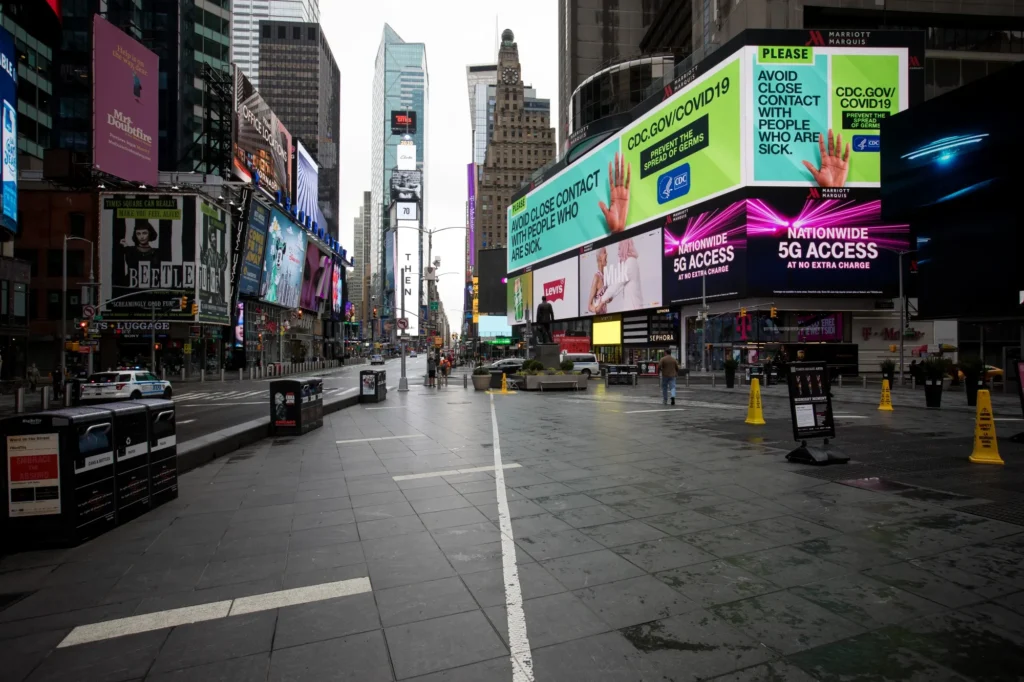
The rumble of subway trains still echoed beneath the streets, but the platforms were nearly empty. Times Square, usually crowded with tourists, performers, and commuters, stood eerily still. Storefront gates were pulled shut. Yellow taxis waited idly along avenues that had once seemed incapable of rest. For generations, New Yorkers had described their city as one that never slept. Yet in the spring of 2020, New York appeared to pause.
At the same moment, another crisis was unfolding behind apartment doors across the five boroughs. Tens of thousands of workers suddenly found themselves unemployed. Restaurant servers, hotel employees, janitors, theater workers, delivery drivers, and retail clerks watched their incomes disappear in a matter of weeks. Rent deadlines, however, did not disappear with them.
By April 2020, New York State had lost more than 1.9 million jobs, with New York City bearing the brunt of the economic collapse. Unemployment in the city climbed to levels not seen since the Great Depression, reaching approximately 20 percent in some months. Food pantry lines stretched for blocks in neighborhoods from the Bronx to Brooklyn, while homeless shelters struggled to contain a deadly virus spreading rapidly through congregate living spaces.
COVID-19 was, first and foremost, a public health disaster. Yet it also exposed something much older: the fragile foundations of poverty and housing security in New York City.
For over two centuries, New York has experienced recurring cycles of economic hardship. The Five Points slums of the nineteenth century, the breadlines of the Great Depression, the fiscal crisis of the 1970s, and the homelessness surge of the 1980s all revealed the same truth—when crisis strikes, the city’s poorest residents experience it first and recover last.
New York city in pictures during the Coronavirus pandemic
The pandemic did not create poverty in New York City. Instead, it illuminated inequalities that had been accumulating for decades.
This article traces how COVID-19 reshaped poverty and housing insecurity in New York City, examining the economic collapse of 2020, the rise of emergency relief efforts, the expansion of eviction protections, and the long-term consequences that continue to shape the city today.
Before the Pandemic: A City of Contrasts
By the beginning of 2020, New York City was enjoying one of the longest periods of economic growth in its history.
Wall Street remained strong. Tourism had reached record levels, attracting more than 65 million visitors annually. Luxury developments continued to rise across Manhattan and parts of Brooklyn, while unemployment hovered near historic lows.
Yet beneath this prosperity lay a stark reality.
According to the U.S. Census Bureau, nearly one in five New Yorkers lived below or near the poverty line before the pandemic. Housing costs consumed enormous portions of household income. More than half of renter households were considered “rent burdened,” meaning they spent at least 30 percent of their income on housing. Hundreds of thousands spent significantly more.
For many residents, financial security was measured not in savings accounts but in paychecks. Missing two or three weeks of work could mean falling behind on rent.
The city’s homeless population also remained historically high. In January 2020, approximately 62,000 individuals slept in New York City’s municipal shelter system each night—the largest shelter population since records began during the Great Depression era.
The modern housing crisis had deep roots. Rising rents, wage stagnation among lower-income workers, and a shortage of affordable housing had produced an environment in which many families lived one emergency away from instability.
Few could have predicted that emergency would arrive so suddenly.
This period matters because it demonstrates that COVID-19 struck an already vulnerable city. The pandemic was less a beginning than an accelerant, exposing longstanding weaknesses in New York’s economic and housing systems.
March 2020: The Epicenter of a Global Pandemic
In early March, reports of a novel coronavirus spreading overseas felt distant to many New Yorkers. Within weeks, the city became the epicenter of the global pandemic.
Hospitals filled rapidly. Refrigerated trucks stood outside medical centers to accommodate the dead. Sirens became a constant presence throughout the city.
Governor Andrew Cuomo issued sweeping restrictions, while Mayor Bill de Blasio announced school closures affecting more than one million students. Businesses closed almost overnight.
The impact on employment was immediate.
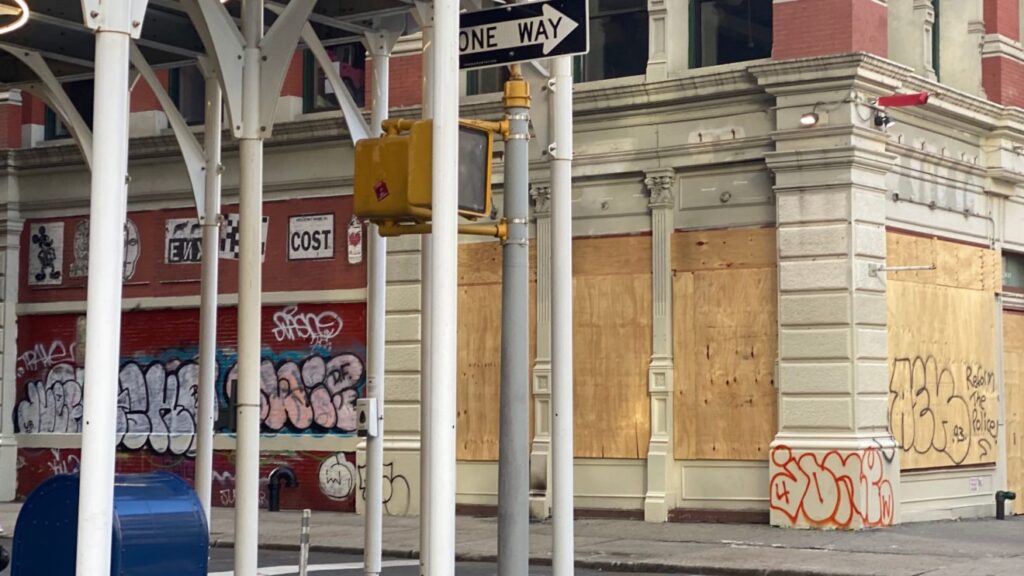
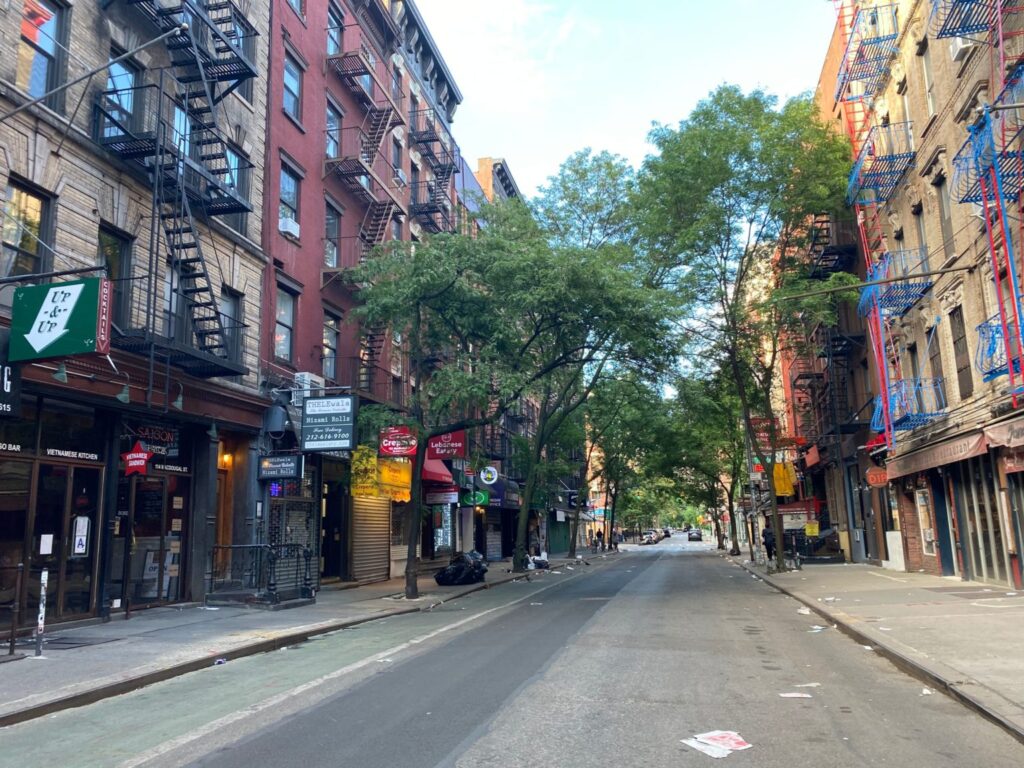
New York city in pictures during the Coronavirus pandemic
Restaurants, bars, theaters, museums, hotels, and countless small businesses shut their doors. Entire industries disappeared in a matter of days. Broadway went dark for the first time in history for an extended period, leaving thousands unemployed.
The New York Times reported in April 2020 that unemployment claims across the state had reached unprecedented levels. Workers lined up outside food distribution centers in Queens and the Bronx. For many, seeking charitable assistance was a new experience.
One Queens resident told reporters, “I’ve worked my entire life. I’ve never stood in a food line before.”
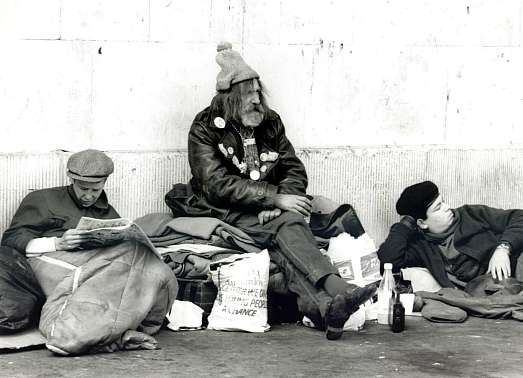
Scenes like these recalled earlier chapters in New York City’s history. During the Great Depression, photographs showed breadlines stretching around blocks in Lower Manhattan. Nearly ninety years later, similar images once again appeared in newspapers and on television screens.
The difference was speed.
Economic crises of the past often unfolded over months or years. COVID-19 transformed livelihoods in a matter of weeks.
This marked a turning point. The public health emergency had become an economic emergency, setting the stage for an unprecedented housing crisis.
The Threat of Mass Evictions
As spring turned to summer, a question loomed over New York City: What would happen when rent came due?
Millions of New Yorkers rented their homes. Tens of thousands had suddenly lost income. Housing advocates warned that without intervention, the city could face a wave of evictions unlike anything seen in modern history.
Historically, housing insecurity has followed economic downturns. During the fiscal crisis of the 1970s, landlords abandoned properties across the Bronx and Harlem. During the recession of 2008, foreclosures displaced thousands nationwide.
COVID-19 presented a different challenge.
Families remained housed, but increasingly through debt. Rent payments were delayed rather than eliminated. Behind closed doors, many households accumulated thousands of dollars in arrears.
Government response was swift and historically significant.
In March 2020, New York implemented an eviction moratorium, temporarily preventing many tenants from being removed from their homes. Federal protections soon followed through the Centers for Disease Control and Prevention.
The moratorium represented one of the most expansive housing interventions in modern American history. For nearly two years, millions of renters nationwide received varying levels of protection from eviction.
Critics argued that landlords faced mounting financial pressure, particularly owners of small apartment buildings. Supporters countered that mass displacement during a pandemic would have produced catastrophic consequences.
The debate highlighted a recurring tension in New York City’s history: Who bears responsibility for housing the poor during times of crisis?
That question had been asked during the nineteenth century poorhouse era, during the Great Depression, and during the homelessness crisis of the 1980s. COVID-19 merely introduced a new chapter.
Hunger Returns to the City
While eviction protections offered temporary relief, another problem emerged with alarming visibility: hunger.
Food pantry lines became defining images of pandemic-era New York.
Outside churches, schools, and community centers, residents waited for hours carrying shopping carts and reusable bags. In some neighborhoods, lines extended several city blocks.
Organizations such as the Food Bank For New York City, City Harvest, and countless local charities expanded operations dramatically. Volunteers distributed produce, canned goods, and prepared meals to families struggling to make ends meet.
Historians often note that poverty becomes most visible during periods of food insecurity. During the nineteenth century, charitable societies documented hunger among immigrant families in Five Points. During the 1930s, soup kitchens became symbols of economic collapse.
COVID-19 revived these historical images.
A report by Feeding America estimated that food insecurity increased substantially during the pandemic, particularly among households with children. Communities already experiencing high poverty rates—including parts of the Bronx, Central Brooklyn, and Upper Manhattan—faced disproportionate hardships.
The pandemic revealed another longstanding pattern: poverty in New York City has never been evenly distributed.
Neighborhoods with lower incomes often experienced higher rates of infection, hospitalization, and death. Essential workers—many unable to work remotely—continued staffing hospitals, grocery stores, transit systems, and delivery services throughout the crisis.
Their labor kept the city functioning, even as many struggled to afford life within it.
This era mattered because it demonstrated how public health and poverty are inseparable. Housing conditions, employment, and access to food all influenced who suffered most during the pandemic.
Homelessness in the Age of COVID-19
Few populations faced greater uncertainty during the pandemic than New York City’s homeless residents.
Congregate shelters presented unique challenges. Social distancing proved difficult in facilities designed for shared living. Public spaces that many unsheltered individuals relied upon—libraries, restaurants, and transportation hubs—closed or operated under restrictions.
By 2020, New York’s shelter system was already serving tens of thousands of people nightly. COVID-19 introduced immediate concerns regarding infection control and capacity.
City officials responded by relocating some shelter residents to hotels, an approach that echoed earlier emergency housing efforts used after natural disasters and major crises. Empty hotels, once filled with tourists, became temporary residences for vulnerable New Yorkers.
The move generated debate. Advocates praised efforts to reduce crowding, while critics raised concerns regarding costs and implementation.
Meanwhile, outreach organizations continued operating under difficult conditions. Staff distributed masks, hygiene supplies, and information throughout the city.
For homeless New Yorkers, the pandemic reinforced a reality long understood by historians of urban poverty: crises do not affect everyone equally.
A person with stable housing could isolate. A person sleeping in a shelter or on the street often could not.
Newspaper accounts from the period described empty sidewalks alongside crowded shelters, highlighting one of the pandemic’s many contradictions.
The experience also contributed to broader discussions about permanent supportive housing, mental health services, and the future of homelessness policy in New York City.
Federal Aid and an Uneven Recovery
By late 2020 and into 2021, federal relief programs began reshaping the economic landscape.
Stimulus payments, expanded unemployment benefits, emergency rental assistance, and the temporary expansion of the Child Tax Credit provided lifelines to millions of Americans.
For many New Yorkers, these programs prevented immediate financial collapse.
Researchers at Columbia University later found that temporary anti-poverty measures significantly reduced poverty rates during portions of the pandemic. Yet recovery remained uneven.
Workers in finance and technology often transitioned to remote employment with relative ease. Service workers faced a more difficult path.
Tourism remained depressed. Office occupancy rates declined. Small businesses closed permanently across the city.
The pandemic also accelerated demographic changes. Thousands of residents temporarily relocated, while remote work altered longstanding relationships between employment and geography.
By 2022, many economic indicators suggested improvement. Yet beneath these statistics remained unresolved questions regarding housing affordability and inequality.
The crisis had exposed structural issues that predated COVID-19 and would likely outlast it.
Lasting Impacts on Modern New York City
The effects of the pandemic continue to shape New York City in significant ways.
First, COVID-19 transformed public conversations about housing insecurity. Eviction protections and rental assistance demonstrated that government intervention could dramatically influence housing outcomes during emergencies.
Second, the pandemic highlighted the essential role of charitable organizations. Food banks, mutual aid groups, and community organizations became critical components of the city’s response.
Third, it accelerated debates regarding affordable housing. Policymakers increasingly framed housing not simply as an economic issue but as a public health concern.
Finally, COVID-19 reinforced a historical lesson repeated throughout New York City’s past: inequality magnifies the impact of crisis.
Whether during the cholera epidemics of the nineteenth century, the Great Depression, or the pandemic of 2020, vulnerable populations have consistently faced the greatest risks.
History suggests that future crises will likely follow similar patterns unless underlying conditions change.
Key Historical Takeaways
- COVID-19 struck a city already experiencing significant housing affordability challenges.
- New York City lost millions of jobs during the early months of the pandemic.
- Eviction moratoriums became one of the largest housing interventions in modern history.
- Food insecurity reached levels reminiscent of earlier economic crises.
- Homeless New Yorkers faced heightened risks due to congregate living conditions.
- Federal relief programs temporarily reduced poverty for many households.
- The pandemic accelerated conversations about affordable housing, public health, and economic inequality.
- COVID-19 did not create poverty in New York City—it exposed and intensified longstanding problems.
Conclusion: History’s Long Shadow
New York City has endured epidemics, depressions, blackouts, fiscal collapse, terrorist attacks, and countless economic disruptions. Each crisis has left its mark upon the city’s landscape and its people.
COVID-19 will be remembered as one of those defining moments.
Future historians may describe the spring of 2020 not only as a public health emergency but as a period when New Yorkers confronted difficult questions about work, housing, and inequality. They may point to the food pantry lines, the shuttered storefronts, and the temporary hotels housing homeless residents as symbols of a city under extraordinary strain.
Yet they will also note something familiar.
Throughout its history, New York has repeatedly revealed both its vulnerabilities and its capacity for adaptation. Charitable organizations mobilized. Neighbors assisted one another. Public institutions expanded protections in ways once thought impossible.
The pandemic did not rewrite the history of poverty and homelessness in New York City. Rather, it became another chapter in a much longer story—one stretching back to the crowded tenements of the nineteenth century and continuing into the present day.
And like every chapter before it, it leaves behind a question for future generations: when the next crisis arrives, what lessons from the past will New York choose to remember?