In the spring of 2000, New York City appeared to be standing at the summit of an economic boom. Manhattan’s streets were crowded with young technology workers, financial professionals, immigrants, service employees, and construction crews. Office towers were filling with Internet companies, investment firms, and media businesses. Rents were rising, Wall Street was thriving, and the city’s unemployment rate remained near historic lows.
Yet beneath the optimism, housing insecurity was already spreading.
Between 1998 and 2001, the number of families staying in New York City’s homeless shelters increased dramatically, from about 4,400 families sheltered nightly in early 1998 to roughly 6,800 by the end of 2001. The increase did not begin with the dot-com crash. It reflected a deeper shortage of affordable housing and declining access to subsidized apartments. When the economic expansion ended, however, the recession added another layer of pressure.
The story of the dot-com crash and homelessness in New York is therefore not simply a story of Wall Street losses or failed Internet companies. It is a story about what happens when a city becomes increasingly expensive during prosperous years and then experiences a sudden loss of jobs and income.
The Late 1990s: Prosperity and an Unstable Housing Market
By the late 1990s, New York City had emerged from the severe fiscal and economic troubles of the 1970s and early 1980s. The city’s economy was increasingly dominated by finance, professional services, media, tourism, and other industries connected to Manhattan’s growing commercial economy.
The Internet boom added another dimension.
Technology companies and Internet start-ups moved into Manhattan, particularly areas around Union Square and the Flatiron District. Young workers arrived with salaries that could support expensive apartments, restaurants, taxis, and entertainment. The city’s streets became associated with a new culture of rapid wealth and technological optimism.
But prosperity was unevenly distributed.
For many low-income New Yorkers, rising rents were occurring faster than household incomes. New York remained overwhelmingly a city of renters. Census data from 2001 placed the city’s homeownership rate at only 33.4 percent. In Manhattan, the rate was approximately 21.9 percent, while the Bronx had a rate of about 20.8 percent.
This mattered because renters had fewer opportunities to accumulate housing wealth and were directly exposed to rent increases. A household living from paycheck to paycheck could remain housed during a period of strong employment but become vulnerable very quickly after a job loss.
At the same time, New York’s affordable housing system was under strain. According to the Coalition for the Homeless, the city substantially reduced the number of subsidized apartments available to homeless families during the second half of the 1990s. The number of families moved from shelters into permanent housing declined significantly during this period.
The housing crisis, in other words, was already developing before the technology bubble burst.
Why This Era Mattered
The late 1990s created a dangerous contradiction. New York was becoming richer, but access to affordable housing was not expanding at the same pace. The economic boom could conceal that contradiction because strong employment allowed many households to remain afloat. Once the economy weakened, the underlying instability became much more visible.
2000: The Technology Bubble Bursts
The turning point came in 2000.
For years, investors had poured money into Internet companies, many of which had little or no profit. Stock prices climbed on expectations of future growth. Then confidence collapsed.
The technology-heavy NASDAQ peaked in March 2000 before beginning a dramatic decline. Companies that had seemed unstoppable suddenly laid off employees or closed entirely. In New York City, the consequences were felt in offices, restaurants, advertising agencies, media companies, technology firms, and commercial real estate.
The Federal Reserve’s records from early 2001 reveal the changing atmosphere. Manhattan’s office market was still tight, but large amounts of office space were becoming available for sublease, much of it released by dot-com companies. At the same time, layoffs were being announced by Internet firms and Web divisions of traditional media companies.
The transformation could be seen physically.
Office floors that had recently been filled with computers, employees, and startup excitement began to empty. Restaurants that had depended on office workers faced fewer customers. Businesses that supplied technology companies lost contracts. Commercial landlords confronted vacancies.
The crash did not immediately produce mass unemployment in New York. The city entered 2001 with a labor market that was still relatively strong. In June 2001, New York City’s unemployment rate was 5.3 percent, only slightly below the previous year’s 5.6 percent.
But the direction had changed.
2001: Recession Arrives
New York City’s recession officially began in January 2001, according to the New York City Comptroller’s analysis. The city’s pre-recession employment peak was approximately 3.75 million jobs. By September, employment had already fallen to about 3.71 million.
For workers with savings and secure housing, losing a job was devastating but potentially temporary. For households already spending most of their income on rent, even a short period of unemployment could threaten their ability to remain housed.
This distinction is essential to understanding homelessness.
Economic downturns do not automatically create homelessness. Their effects depend on the condition of the housing market, the availability of rental assistance, wages, family support, unemployment benefits, and the capacity of government programs to prevent eviction.
New York entered the recession with significant weaknesses in several of these areas.
Families were increasingly dependent on shelters because affordable permanent housing was difficult to obtain. Academic research later found that the city’s family shelter population rose from 4,315 families in December 1997 to 9,303 by May 2003. Researchers concluded that the rise resulted from a combination of reduced movement from shelters into subsidized housing and the recession that followed the economic boom.
The economic downturn therefore acted less like a single cause and more like an accelerant.
Why This Era Mattered
The recession demonstrated how closely employment and housing security were connected. A city could have thousands of jobs and strong economic activity while still leaving many households vulnerable to losing their homes. When employment weakened, that vulnerability became increasingly visible in the shelter system.
September 11, 2001: A Second Economic Shock
Then, on September 11, New York City suffered a catastrophe that transformed the economic crisis.
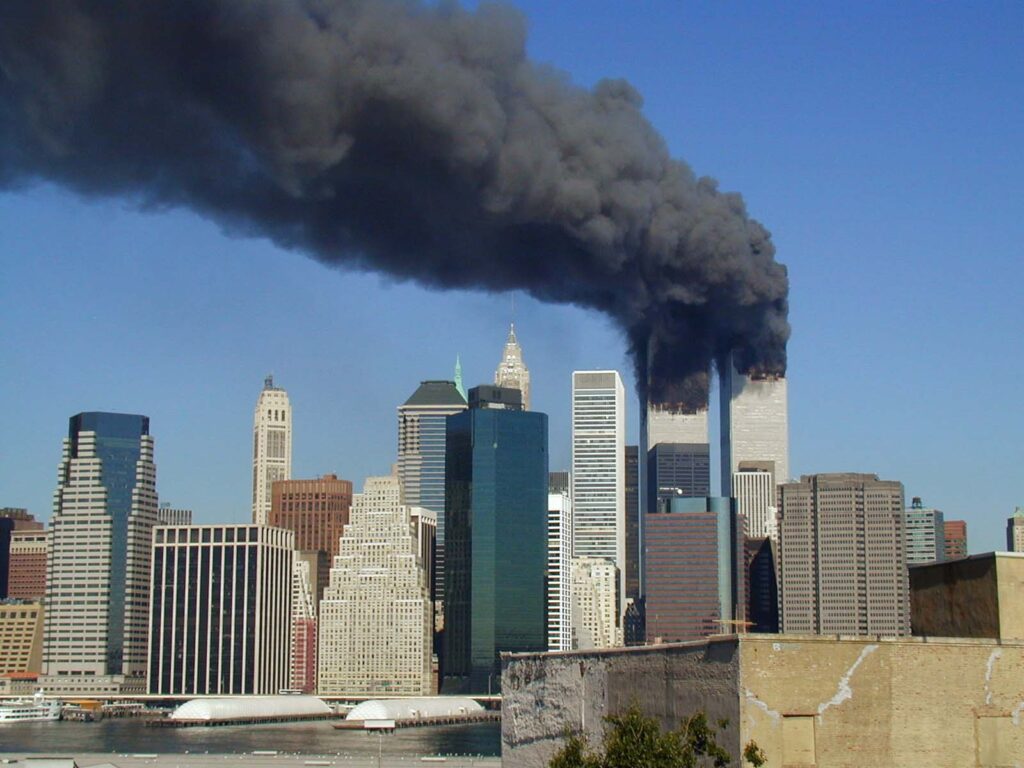
The attacks destroyed the World Trade Center and disrupted Lower Manhattan, one of the city’s most important employment centers. The physical destruction was enormous. According to the U.S. Department of Housing and Urban Development, approximately 13.4 million square feet of office space at the World Trade Center was destroyed and another 16.6 million square feet in the surrounding area was damaged.
The effects spread far beyond the immediate disaster zone.
Workers lost jobs. Businesses closed or relocated. Hotels, restaurants, retailers, transportation companies, and other industries dependent on Lower Manhattan suffered. Within the 30 days following the attacks, approximately 22,000 people filed for job-loss benefits directly connected to the disaster.
The city was now dealing with two economic shocks almost simultaneously: the recession associated with the bursting technology bubble and the extraordinary disruption caused by September 11.
By December 2001, New York City’s unemployment rate had reached 7 percent, compared with 5.2 percent a year earlier. Employment had fallen by 2.5 percent over the preceding twelve months, while almost 22,000 Wall Street jobs had disappeared during 2001.
For New Yorkers already struggling with rent, this was particularly serious.
A family did not need to lose a job in Lower Manhattan to feel the consequences. Economic contractions move through cities like chains. When one company closes, another loses customers. When a worker loses income, household spending falls. When businesses lose revenue, additional workers can be laid off.
Housing insecurity consequently became part of the broader economic aftermath.
2002: Homelessness Reaches a New High
By the winter of 2001 to 2002, the city’s shelter system was under extraordinary pressure.
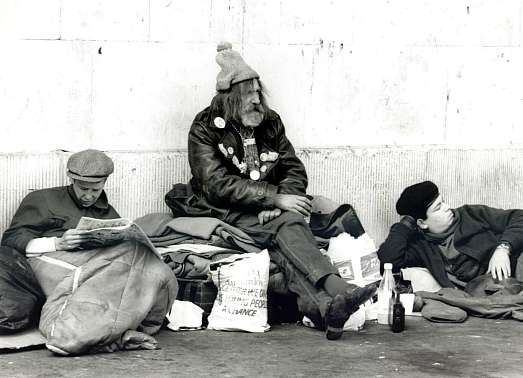
In January 2002, approximately 31,000 people were staying in municipal shelters each night, a record at the time. The average number of families in temporary housing had risen sharply, while families were spending an average of approximately 315 days in temporary accommodation, nearly eleven months.
The increase was not limited to families.
From 2001 through 2003, approximately 55,914 different single adults used the city’s Department of Homeless Services shelter system for at least one night. On an average night, roughly 7,800 single adults were housed in the municipal shelter system.
Inside these shelters, homelessness was not an abstract statistic. Families navigated crowded temporary accommodations while trying to keep children in school. Adults searched for work while attempting to maintain contact with landlords, relatives, employers, and social-service agencies. Single adults faced their own challenges, including disability, unemployment, mental illness, and the difficulty of securing permanent supportive housing.
The city government and charitable organizations attempted to respond, but demand exceeded the ability of the affordable housing system to quickly provide permanent solutions.
The Census Bureau’s 2000 shelter count also illustrates why homelessness statistics must be interpreted carefully. The federal census counted people residing in emergency and transitional shelters on a single night, but explicitly warned that the figures did not represent everyone experiencing homelessness. Some people stayed with relatives or friends, while others lived in locations outside the shelter system.
Thus, even the official numbers represented only part of the housing crisis.
Why This Era Mattered
The events of 2001 and 2002 established a pattern that would influence New York for years: economic shocks could push vulnerable households into homelessness, but the length and severity of homelessness depended heavily on the supply of affordable housing and the city’s ability to move people into permanent homes.
2003 and Beyond: Recovery Without a Simple Solution
New York’s economy eventually began to recover. Rents in some commercial and residential markets declined from their peak, and employment gradually stabilized. By 2004, the city was beginning to experience a more sustained economic recovery.
But recovery did not immediately erase homelessness.
This was one of the most important lessons of the period. Homelessness often responds to economic conditions with a delay. A worker who loses employment may initially rely on savings, relatives, credit, or informal arrangements. Only after those resources are exhausted might that person enter the shelter system.
The same pattern applied to families.
Research on New York City’s shelter population found that the effects of macroeconomic conditions appeared with a lag. Even after economic conditions improved, thousands of families remained in shelters because the underlying shortage of subsidized housing had not disappeared.
The dot-com crash therefore became part of a larger historical transition.
It revealed that New York’s prosperity could coexist with profound housing insecurity. It also showed that homelessness was shaped by more than unemployment alone. Housing costs, affordable housing supply, government assistance, family resources, and economic conditions interacted with one another.
The Lasting Impact on Modern New York City
The legacy of the early 2000s can still be seen in New York’s housing geography.
The city’s right-to-shelter system means that New York differs from many other American cities. A large majority of people experiencing homelessness are able to enter the municipal shelter system rather than sleeping outdoors.
Yet the pressure on that system has continued.
The New York City Comptroller has reported that the nightly Department of Homeless Services shelter population increased from approximately 22,955 people in January 2000 to 62,679 in January 2020, an increase of 175 percent.
The figures demonstrate why the dot-com crash should not be remembered simply as a financial event.
It was a moment when the relationship between employment, housing costs, and homelessness became unusually clear. New York entered the new millennium with rising prosperity but an insufficient supply of affordable housing. The economic downturn then exposed how many households were living close to the edge.
The lesson also helps explain why homelessness can remain high even during economic recovery. Creating jobs can improve household income, but it does not automatically create affordable apartments. If rents continue to rise faster than wages, employment alone may not provide enough protection.
Key Historical Takeaways
First, the housing crisis preceded the dot-com crash. Homelessness among New York families was already increasing during the late 1990s.
Second, the dot-com crash intensified existing weaknesses. The recession reduced employment and household income after years of rapid economic growth.
Third, September 11 magnified the downturn. The attacks destroyed major commercial space and produced additional job losses during an already fragile economic period.
Fourth, homelessness responded with a delay. Families and individuals often exhausted savings, family support, and other resources before entering shelters.
Finally, affordable housing was central to the problem. The evidence shows that shelter populations did not depend on economic conditions alone. The availability of subsidized permanent housing strongly influenced whether people could leave shelters and regain stable homes.
Conclusion: When the Boom Ended
At the beginning of the new millennium, New York City was celebrated as a symbol of economic transformation. Its skyline was filled with cranes, its financial districts were crowded with workers, and the emerging technology economy promised a future built around information and innovation.
Then the boom ended.
The dot-com crash exposed weaknesses that prosperity had concealed. The recession reduced employment. September 11 delivered another extraordinary shock. Families who had already struggled with high rents and limited affordable housing found themselves facing a more dangerous question: how long could they remain housed when their income disappeared?
By the early 2000s, thousands of New Yorkers were sleeping in shelters each night.
Their experiences remind us that homelessness is rarely caused by one event. It emerges when economic shocks meet structural vulnerabilities. In New York, the technology crash did not create the housing crisis by itself. Instead, it revealed how fragile housing security had become for many working families and individuals.
The history of the dot-com crash is therefore also a history of the limits of prosperity. A city can generate extraordinary wealth while leaving many residents vulnerable to losing the most basic foundation of economic life: a permanent home.
New York entered the twenty-first century believing that its economic future was expanding without limits. The experience of 2000 through 2002 told a more complicated story. Economic growth could lift a city, but without sufficient affordable housing and effective pathways out of homelessness, the benefits of that growth would remain unevenly distributed.
The shelter doors that filled during those years were not merely symbols of recession. They were evidence of a deeper historical truth: housing insecurity is shaped by the relationship between wages, rents, public policy, and the supply of homes. When those forces fall out of balance, even a prosperous city can produce profound insecurity.
That lesson, first made painfully visible at the turn of the millennium, remains central to understanding the continuing history of poverty and homelessness in New York City.