Folklore still finds playful expressions today, including in the form of funny cryptid T-shirts from shopatrays.com, but the relationship between New York City and folklore goes back much further. In the crowded tenement neighborhoods of the nineteenth and early twentieth centuries, stories, rumors, superstitions, and fears traveled almost as quickly as the people who lived there.
A City Transformed by Immigration
In the nineteenth century, New York City experienced extraordinary population growth. Immigrants arrived from Ireland, Germany, Italy, Eastern Europe, and many other parts of the world, while rural Americans also moved into the city looking for work.
Lower Manhattan absorbed much of this growth.
Buildings that had originally been designed for relatively small households were divided into apartments and rented to multiple families. The resulting tenements became some of the most densely populated residential spaces in the city.
At 97 Orchard Street, for example, a five-story tenement constructed in 1863 eventually housed an estimated 7,000 people from more than 20 nations over the building’s history. Individual apartments were extremely small, with early residents sharing spaces that offered little privacy.
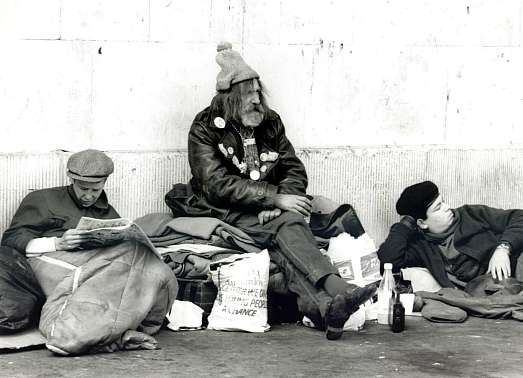
For many families, poverty meant making difficult choices between rent, food, clothing, and medical expenses. Employment could be irregular, particularly for unskilled workers. A serious illness or workplace injury could quickly push a household toward financial crisis.
These conditions created an environment in which uncertainty was part of everyday life.
And uncertainty is one of the conditions in which folklore thrives.
What Was a Tenement?
The word “tenement” did not originally mean a slum. In the broadest sense, it referred to a building occupied by multiple households.
As New York’s population increased, however, tenements became increasingly associated with overcrowding and poor housing conditions.
Many older buildings had inadequate ventilation and limited access to clean water. Before major housing reforms, toilets could be shared by large numbers of residents, and some buildings depended on outdoor privies or communal water pumps.
The physical environment could be uncomfortable and sometimes dangerous.
Hallways were narrow. Staircases could be poorly illuminated. Rooms were crowded. Families heard the movements of neighbors through thin walls and ceilings.
At night, the sounds of a dense neighborhood could become difficult to identify.
A knock in a hallway, footsteps on a staircase, shouting from another apartment, or an unexplained disturbance outside could quickly become the subject of conversation.
In a neighborhood where dozens of families lived within a few buildings, stories could spread rapidly.
Five Points and the Reputation of a Dangerous Neighborhood
Few New York neighborhoods acquired a reputation as powerful as Five Points.
Located in what is now Lower Manhattan, Five Points developed around the former Collect Pond. After the pond was drained and the surrounding land developed, the area became increasingly populated by working-class and immigrant residents.
By the middle of the nineteenth century, newspapers and visitors frequently portrayed Five Points as a center of crime, disorder, prostitution, drinking, and poverty.
The reality was considerably more complicated.
Five Points was a functioning community containing families, businesses, churches, political organizations, entertainment venues, and immigrant networks. It was also home to a significant Black community.
Nevertheless, sensational accounts transformed the neighborhood into a symbol of urban danger.
Visitors sometimes entered the district expecting to encounter violence and vice. Newspaper stories reinforced those expectations.
This distinction is important when examining folklore.
A neighborhood can develop frightening stories because genuinely dangerous events occur there. But it can also develop frightening stories because outsiders repeatedly describe it as dangerous.
In Five Points, both processes operated simultaneously.
Stories in the Tenement Neighborhood
Tenement residents came from many different cultural backgrounds.
Irish immigrants brought traditions from Ireland. German immigrants carried their own legends and customs. Later immigrant communities brought traditions from Italy, Eastern Europe, and elsewhere.
These traditions did not remain isolated.
New York’s neighborhoods were places of constant cultural exchange. People encountered one another in workplaces, markets, schools, churches, synagogues, saloons, streets, and apartment buildings.
Stories changed as they moved between communities.
A tale told by one family might be repeated by a neighbor and eventually appear in a newspaper. Details could change with every retelling.
Some stories involved ghosts or mysterious deaths. Others concerned strange sounds, unexplained events, dangerous buildings, or people believed to possess unusual abilities.
It would be misleading to assume that poverty automatically produced superstition. Belief in folklore existed among wealthy and poor New Yorkers alike.
What made the tenement environment distinctive was density.
People lived close enough to observe one another constantly. A strange event did not remain isolated for long.
The Fear of Disease
Some of the most serious fears in tenement communities had nothing supernatural about them.
They involved disease.
During the nineteenth century, New Yorkers faced outbreaks of diseases including cholera, smallpox, and tuberculosis. Crowded housing could make controlling infectious disease extremely difficult.
For a poor family, illness could have consequences beyond physical suffering.
A sick worker might be unable to earn wages. Medical expenses could consume scarce savings. Children might have to leave school or work. A prolonged illness could threaten a family’s ability to pay rent.
Disease therefore became part of the emotional landscape of tenement life.
Residents could fear an unfamiliar illness almost as much as they feared crime.
At the same time, reformers increasingly argued that poor housing was a threat to the health of the entire city.
This changed the discussion surrounding tenements.
Poverty was no longer viewed only as an individual or family problem. Housing conditions became a public-health issue.
When Poverty Became a Public Spectacle
During the second half of the nineteenth century, journalists, reformers, photographers, and social investigators increasingly entered New York’s poorest neighborhoods.
Their work exposed conditions that many middle- and upper-class New Yorkers rarely witnessed directly.
One of the most influential figures was Jacob Riis.
His 1890 book, How the Other Half Lives, used written descriptions and photographs to document poverty and overcrowding in New York.
Riis’s work helped draw public attention to housing conditions.
His photographs also changed how Americans imagined the tenement.
Dark rooms, crowded families, narrow streets, and exhausted workers became visual symbols of urban poverty.
The photographs were powerful evidence, but they also contributed to a particular image of the tenement as a mysterious and threatening world.
To people who had never entered these neighborhoods, the tenement could appear almost like a separate city hidden within New York.
That perception mattered.
The more these neighborhoods were represented as places of danger, the more easily fear became attached to the people and buildings themselves.
The Tenement as an Urban Frontier
For many newcomers, New York was unfamiliar territory.
Immigrants arrived without knowing the language, customs, streets, or institutions of their new city. Employment could be unstable, and housing arrangements could change quickly.
The tenement therefore became both home and frontier.
Residents had to learn how the city worked.
Where could affordable food be found? Which factories were hiring? Which streets were safe after dark? Where could someone find medical assistance? Who could be trusted?
Information traveled through personal networks.
So did warnings.
A story about a dangerous alley might prevent someone from taking a particular route. A rumor about a building could influence where a family was willing to live. A tale about an unexplained death could remain attached to a location long after the original event had been forgotten.
In this way, folklore could perform a practical social function.
It helped people remember places.
When Reform Changed the Tenement
By the late nineteenth century, housing reform had become an increasingly important part of New York’s public life.
Investigators documented poor ventilation, inadequate sanitation, overcrowding, and unsafe construction.
The city began introducing stronger housing regulations.
The major turning point came with the Tenement House Act of 1901.
The legislation established stricter requirements concerning light, ventilation, sanitation, and fire safety in new tenement construction.
These reforms did not eliminate poverty or overcrowding overnight.
But they changed the physical environment.
New buildings increasingly had to include features intended to provide residents with more light and air. Government inspection expanded, and housing conditions became a more formal responsibility of municipal authorities.
As buildings changed, so did the environment in which neighborhood stories developed.
Some older structures disappeared.
Some communities moved.
Some legends faded.
Others survived.
Why Old Stories Survived
Folklore has an unusual relationship with physical places.
A building can be demolished, but the story associated with it may survive.
A street can be renamed, yet older residents may continue using the former name.
A neighborhood can change dramatically while its reputation remains in newspapers, books, family memories, and popular culture.
This is one reason historical folklore is valuable.
A legend does not have to be literally true to reveal something about the society that created it.
A story about a haunted building may tell historians that residents remembered the building as frightening.
A rumor about a dangerous street may reveal concerns about crime.
A story about an unexplained death may preserve a community’s memory of tragedy.
The historian’s task is therefore not simply to ask whether a legend happened exactly as described.
The more useful question is often: why did people tell the story?
From Tenement Folklore to Modern Pop Culture
The transformation of New York did not eliminate the public fascination with strange stories.
Instead, folklore gradually moved into newspapers, novels, theater, radio, film, television, and eventually the internet.
The strange creature, the haunted building, the mysterious stranger, and the unexplained event became familiar elements of popular culture.
Modern American culture continues to turn folklore into entertainment, art, clothing, jokes, and other forms of expression.
That is why the connection between old New York folklore and modern culture is worth examining.
A nineteenth-century immigrant telling a story in a crowded tenement kitchen and a modern person wearing a playful design inspired by a legendary creature may seem to occupy completely different worlds.
Yet both reflect the same basic human tendency: taking unusual stories and giving them cultural meaning.
Poverty, Fear, and Community
It is important not to romanticize tenement life.
The communities that produced these stories also experienced serious hardship.
Residents dealt with low wages, unstable employment, dangerous working conditions, overcrowding, discrimination, illness, and the constant possibility of losing housing.
Folklore existed alongside these realities.
Stories could provide entertainment after a difficult day. They could preserve cultural traditions. They could warn children about dangerous places. They could create a shared identity among neighbors.
But they could also reinforce stereotypes.
When newspapers repeatedly portrayed poor immigrant districts as inherently dangerous, readers outside those communities could begin to see poverty itself as evidence of criminality or moral failure.
That perception influenced public attitudes toward the people living in tenements.
The history therefore requires balance.
Tenement neighborhoods were places of hardship, but they were not simply places of misery. They were also places where families built businesses, religious institutions, social organizations, friendships, and new forms of cultural life.
What Tenement Folklore Tells Us Today
Modern New York looks radically different from the city of the nineteenth century.
The population has changed. Housing standards are different. Public-health systems are more advanced. Many historic tenements have been renovated, demolished, or preserved as museums and landmarks.
Yet some underlying issues remain familiar.
Housing affordability, homelessness, overcrowding, immigration, and unequal access to resources continue to shape conversations about New York.
The historical value of tenement folklore is that it places these issues within a much longer story.
People have always created explanations for unfamiliar circumstances.
They have always told stories about dangerous places.
They have always used humor, fear, memory, and imagination to interpret the city around them.
Key Historical Takeaways
The folklore of New York’s tenement communities developed within a complicated environment of immigration, poverty, overcrowding, cultural exchange, public-health concerns, and social reform.
Five Points became a powerful example of how a poor neighborhood could acquire a reputation that extended far beyond its actual residents.
Immigrant communities brought diverse traditions that interacted with one another in densely populated neighborhoods.
Disease and housing insecurity created genuine fears, while newspapers and reformers sometimes amplified those fears through dramatic representations of tenement life.
Housing reforms eventually changed the physical conditions of many neighborhoods, but the stories created during the earlier period survived through literature, journalism, family memories, museums, and popular culture.
Conclusion
The history of fear and folklore in New York’s tenement communities is ultimately a history of people trying to understand a rapidly changing city.
Behind the legends were real streets, real buildings, and real families.
The residents of these neighborhoods faced poverty and uncertainty, but they also created communities, preserved traditions, exchanged stories, and developed identities within one of the world’s fastest-changing cities.
Some stories disappeared. Others survived for generations.
Today, those stories offer more than entertainment. They provide another way of understanding the emotional history of New York City.
The old tenements remind us that urban history is not made only by laws, buildings, census numbers, and political decisions. It is also made through memory—through the stories people tell about where they lived, what frightened them, what fascinated them, and what they wanted future generations to remember.