On a winter night in nineteenth-century New York, the difference between having a home and having nowhere to sleep could be measured in inches: the width of a doorway, the floor of a lodging house, or a narrow space beneath a bridge. By the 1800s, New York had become one of the fastest-growing cities in the United States, but its explosive growth created a problem that municipal leaders struggled to control: thousands of people could live and work in the city without having a secure place to call home.
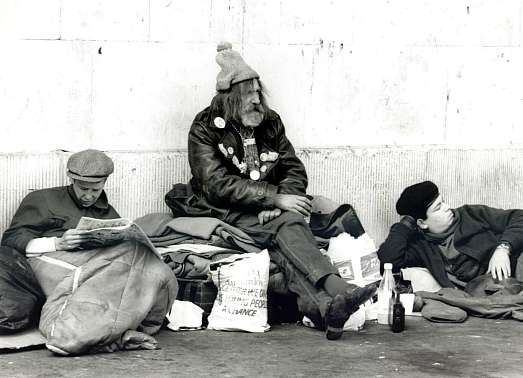
For poor New Yorkers, nighttime was often a daily search for shelter. Some paid a few cents for a crowded bed in a lodging house. Others relied on charitable missions, almshouses, police stations, or the hospitality of friends and relatives. Those who had exhausted their options might sleep in doorways, alleys, marketplaces, or other public spaces.
Their experiences reveal much more than the history of homelessness. They show how immigration, industrialization, rising rents, low wages, public health crises, charitable reform, and changing ideas about poverty transformed New York during the nineteenth century.
New York at the Beginning of the 1800s
At the start of the nineteenth century, New York was still concentrated around lower Manhattan. Streets were narrow, transportation was limited, and much of the city was within walking distance of the waterfront and commercial districts.
The city’s population was growing rapidly. The opening of the Erie Canal in 1825 accelerated New York’s importance as a commercial center, connecting the port to the interior of the country. Ships brought goods and immigrants into the city, while factories, workshops, docks, construction sites, and businesses created new opportunities for employment.
But economic opportunity did not guarantee housing security.
A laborer could find work unloading cargo one week and be unemployed the next. A domestic servant could lose a position and suddenly have nowhere to stay. A family whose main wage earner became sick could quickly fall behind on rent.
The city’s earliest responses to extreme poverty were largely institutional. Almshouses provided shelter for some people who could not support themselves, although admission was often accompanied by strict rules and social stigma. The distinction between poverty, unemployment, illness, disability, and homelessness was not always clear.
For people who did not enter charitable or public institutions, informal shelter was often the only alternative.
Why this era mattered: Early nineteenth-century New York established a pattern that would become increasingly important: economic growth attracted workers faster than the city could provide affordable, stable housing for everyone.
The 1820s and 1830s: Immigration Changes the City
As immigration accelerated, New York’s population expanded dramatically.
Irish immigrants were particularly numerous, especially during the decades surrounding the Great Famine of the 1840s. Many arrived with little money and few possessions. Some found work quickly; others survived through irregular labor, domestic service, dock work, construction, and other low-paid occupations.
Housing adapted to the demand, but often in unhealthy ways.
Older buildings were divided into smaller rooms. Families rented individual rooms or shared apartments with other households. In the most crowded districts, several people could occupy spaces originally designed for far fewer residents.
The Five Points neighborhood became one of the most notorious examples. Located near what is now Lower Manhattan, Five Points developed a reputation for overcrowding, poverty, crime, and disease. Its residents included immigrants and working-class New Yorkers living under difficult conditions.
For people without enough money for private lodging, the streets could become an extension of the housing system.
A person might spend the night in a cheap boardinghouse, then move to a charitable institution after losing employment. Another might sleep in a cellar or doorway. Temporary shelter was often assembled from whatever resources were available.
This was not necessarily a permanent condition. Nineteenth-century homelessness could be cyclical. A person might move between employment, rented rooms, relatives’ homes, charitable institutions, and the street depending on the state of the economy.
Why this era mattered: New York’s growing immigrant population created enormous economic energy, but it also increased competition for low-cost housing and employment. The city’s housing crisis was becoming structural rather than occasional.
The 1840s and 1850s: Lodging Houses and the Search for a Bed
By the middle of the century, New York’s expanding working population created a market for extremely cheap accommodations.
Lodging houses offered beds or sleeping spaces to people who could not afford conventional apartments. Some were privately operated businesses; others were connected to charitable organizations or religious missions.
Conditions varied enormously.
A respectable boardinghouse might provide a relatively stable room, while the cheapest establishments could be overcrowded, poorly ventilated, and unhygienic. Residents sometimes paid by the night, making lodging houses particularly important to casual laborers and people with unstable incomes.
The Bowery and surrounding neighborhoods became closely associated with cheap lodging and street life.
The Bowery was more than a place of poverty. It was a major entertainment and commercial corridor, filled with theaters, shops, saloons, restaurants, cheap hotels, and lodging establishments. Its streets remained active late into the night, making the area an important refuge for people who had nowhere else to go.
At the same time, charitable organizations increasingly attempted to distinguish between people considered “deserving” of assistance and those viewed as responsible for their own poverty.
This distinction shaped the way shelters operated. Assistance could come with moral expectations. Reformers often believed that sobriety, regular employment, and disciplined behavior were necessary steps toward independence.
For someone who had lost a job, however, moral reform could seem less urgent than finding a bed before nightfall.
Why this era mattered: Lodging houses became an important part of New York’s informal housing system. They demonstrated that homelessness was increasingly connected to the city’s labor market and housing costs, not simply to individual misfortune.
The 1860s and 1870s: War, Economic Change, and Urban Crowding
The Civil War transformed New York economically and socially.
Manufacturing expanded, commerce grew, and the city became even more deeply integrated into national markets. Yet economic growth remained uneven. Workers could benefit from booming industries while remaining vulnerable to layoffs, injury, illness, or sudden changes in demand.
Following the economic Panic of 1873, unemployment became a major problem across the United States.
In New York, thousands of workers depended on irregular employment. When work disappeared, rent became difficult or impossible to pay. A person could fall from a rented room into temporary lodging and eventually onto the streets with remarkable speed.
The city also continued to attract newcomers.
Immigrants arriving through the port needed somewhere to live while searching for employment. Established neighborhoods became increasingly dense. Landlords divided buildings into smaller units, and overcrowding became a defining characteristic of many working-class districts.
Public health officials were increasingly alarmed.
Crowded housing created ideal conditions for diseases such as cholera, typhus, tuberculosis, and smallpox to spread. Poor sanitation affected not only residents of the most impoverished neighborhoods but the city as a whole.
During these decades, charitable missions expanded their role. Religious groups and reform organizations offered food, clothing, temporary shelter, and religious instruction.
Yet the sheer scale of need made private charity incapable of solving the problem alone.
Why this era mattered: The economic instability of the 1870s demonstrated how quickly workers could become homeless during a downturn. At the same time, overcrowding made poverty a public-health concern rather than simply a private hardship.
The 1880s: Cheap Beds and the Bowery
By the 1880s, New York had become a metropolis of enormous contrasts.
Wealthy neighborhoods displayed elaborate houses and fashionable hotels, while districts downtown contained crowded tenements and inexpensive lodging facilities.
For homeless men, the Bowery became particularly important.
Cheap lodging houses offered a range of accommodations. Some provided beds in large shared rooms; others offered small compartments or bunks. The quality depended heavily on price.
One of the most revealing features of the era was the existence of extremely cheap sleeping arrangements. A person with only a few cents could sometimes obtain a place to spend the night, even if the accommodation was uncomfortable and crowded.
This meant that homelessness did not always look like a person permanently sleeping outdoors.
A man might work during the day, purchase a cheap meal, pay for a bed at night, and repeat the process. Another person might sleep in a mission one evening and on the street the next.
Women and families faced different challenges. Women without family support could rely on domestic service, boardinghouses, relatives, or charitable institutions. Families experiencing extreme poverty were particularly vulnerable because losing a single income could threaten the entire household.
Meanwhile, New York reformers were increasingly documenting conditions in poor neighborhoods.
Investigations into tenements and lodging houses produced a growing body of evidence about overcrowding, sanitation, mortality, and living conditions.
Why this era mattered: The 1880s marked a transition toward systematic investigation. Poverty was increasingly being documented through surveys, photographs, journalism, and reform campaigns.
The 1890s: Reformers Look Into the Night
The final decade of the nineteenth century brought some of the most influential investigations of urban poverty.
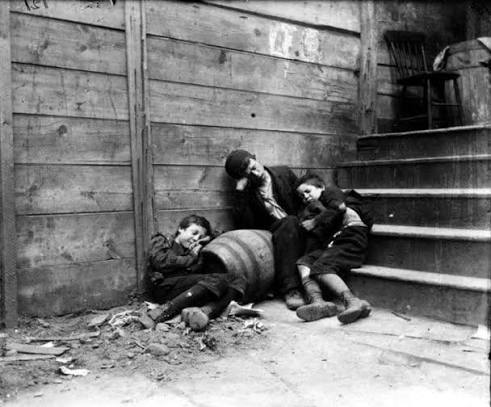
Photographer and social reformer Jacob Riis became famous for documenting the living conditions of New York’s poor. His 1890 book, How the Other Half Lives, used photographs and descriptions to expose conditions in overcrowded neighborhoods.
Riis’s work helped middle-class readers visualize a world that many had rarely encountered.
His photographs showed cramped rooms, crowded streets, dark alleys, and families living in difficult conditions. His descriptions also drew attention to the relationship between housing and poverty.
The city increasingly recognized that poor housing could contribute to disease, crime, and social instability.
Government regulation expanded. Housing reformers pushed for better ventilation, sanitation, fire safety, and minimum standards.
Charitable organizations also became more systematic. Settlement houses, missions, shelters, and reform organizations attempted to address poverty through education, food assistance, employment services, and temporary accommodation.
Yet homelessness remained.
The underlying causes were too deeply connected to the city’s economy and housing market to disappear through charity alone.
The streets of late nineteenth-century New York remained populated by people who had fallen through the city’s economic system: unemployed laborers, migrants, elderly people without family support, disabled workers, alcohol-dependent residents, and others who had no stable housing.
Alongside the harsh realities of poverty, nineteenth-century New York was also a city of rumors, legends, and stories that traveled quickly through crowded neighborhoods. Tales of unexplained events, mysterious strangers, unusual creatures, and strange happenings circulated through newspapers, taverns, theaters, and boardinghouses. In a city where millions of people passed through unfamiliar streets and neighborhoods, folklore became one way residents made sense of what they could not easily explain.
This evolution is worth noting because folklore has always been closely tied to the way people experience unfamiliar places. Nineteenth-century New Yorkers encountered a rapidly changing city filled with newcomers, crowded streets, unfamiliar neighborhoods, and stories arriving from across the country. The mysterious and the unexplained could therefore become part of the city’s wider popular imagination, just as they would in later generations.
Where Did Homeless New Yorkers Actually Sleep?
There was no single answer.
Depending on circumstances and available money, a homeless or housing-insecure New Yorker might sleep in:
- A cheap lodging house or boardinghouse
- A religious mission
- A charitable shelter
- An almshouse
- A police station or other temporary institutional space
- A relative’s or friend’s home
- A cellar or overcrowded tenement
- A doorway, alley, market area, or other public place
These options formed an unstable hierarchy.
Having a few cents could mean the difference between sleeping outdoors and obtaining a place in a lodging house. Having family connections could provide another temporary solution. Religious missions could offer emergency assistance. Almshouses provided institutional shelter but were often associated with stigma and strict regulation.
In other words, homelessness in nineteenth-century New York was not one experience. It was a spectrum of housing insecurity shaped by income, gender, age, employment, immigration status, health, family relationships, and access to charity.
The Lasting Impact on Modern New York
The nineteenth century established many of the patterns that continue to influence discussions of homelessness in New York City.
First, housing and employment were closely connected. People with unstable incomes were particularly vulnerable when rents consumed a large share of their earnings.
Second, immigration played an enormous role in shaping the city. New arrivals often entered the lowest-paid sectors of the labor market and depended on dense networks of inexpensive housing.
Third, the period demonstrated the limitations of emergency charity. Shelters and missions could provide immediate assistance, but they could not eliminate the economic pressures producing housing instability.
Finally, nineteenth-century reformers helped establish the idea that housing conditions were a legitimate subject of public policy. Their investigations contributed to building regulations, sanitation reforms, housing inspections, and broader debates about the responsibilities of government.
The city changed enormously after 1900, but the fundamental question remained familiar: what happens when a growing city offers economic opportunity while safe, affordable housing remains beyond the reach of some of its workers?
Key Historical Takeaways
- Homelessness existed in many forms in nineteenth-century New York.
- Cheap lodging houses became an important source of temporary shelter.
- Immigration and population growth increased pressure on low-cost housing.
- Economic downturns could quickly push working people into housing insecurity.
- Overcrowding connected poverty with public-health problems.
- Religious missions, charities, and almshouses provided important but limited assistance.
- Reformers increasingly used journalism, photography, statistics, and investigation to expose poor living conditions.
- By the end of the century, New York was beginning to treat housing and homelessness as problems requiring broader public intervention.
Conclusion: A City Built on Movement
The nineteenth-century New Yorker searching for somewhere to sleep was living through a period of extraordinary urban transformation.
The city promised work, commerce, immigration, entertainment, and opportunity. But it also demanded that residents survive within an increasingly expensive and crowded urban environment.
For some, the path from employment to homelessness could be gradual: a lost job, an unpaid rent bill, a move into cheaper quarters, then a night in a lodging house. For others, it could happen suddenly through illness, injury, family breakdown, or economic crisis.
Their sleeping places—Bowery lodging houses, charitable missions, almshouses, crowded rooms, doorways, and streets—were part of the physical history of New York itself.
Understanding those places helps explain an important truth about the city’s past: homelessness was never simply a story about people without homes. It was also a story about wages, rents, immigration, public health, economic cycles, charity, government, and the enormous pressures created by urban growth.
The streets of nineteenth-century New York have changed, but the historical questions remain remarkably familiar. Who can afford to remain in a rapidly growing city? What happens when housing costs rise faster than wages? And how should a city respond when economic opportunity exists alongside deep housing insecurity?
Those questions began long before the modern shelter system, and the answers New York developed in the nineteenth century helped shape the city that followed.